To: Secondary School Principals and Teachers From: Dr. Bri Conley, Director of Educational Equity & Access Date: October 19, 2026 Subject: Attendance-Based Grade Reductions Report and End of Term Process
For teachers who have elected to use attendance-based grade reductions under HB 502 and have included this practice in their approved course disclosure, IT has developed a report to support implementation. The Grade Adjustment Video provides step-by-step instructions for accessing the report and applying an attendance-based grade reduction.
Please remember the following:
Attendance-based grade reductions are optional.
A student must have 5 or more unexcused absences during the grading term to be eligible for a grade reduction.
Parents/guardians have a week to excuse their student’s absence.
Absences beyond the one-week grace period may be excused at the principal’s discretion only when extenuating circumstances exist or a district attendance coding error has occurred.
At this time, unexcused tardies may not be used to determine eligibility for an attendance-based grade reduction.
Teachers may reduce a student's grade by up to, but no more than, 10% of the total points available for the course during the grading term.
Any attendance-based grade reduction must be included in the teacher's approved course disclosure document.
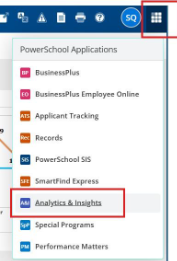
The attendance columns are a new feature that PowerSchool has added to the gradebook for reference. Those columns should not be used for adjusting a student’s grade because they do not differentiate between an unexcused and excused absence or tardy. They are simply a count of all absences or tardies for that class. If a teacher wants to see a report of unexcused absences, they can use Analytics and Insights by clicking on the waffle menu in the top right corner.
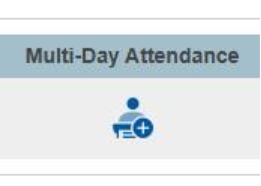
The unexcused absence should be the first report that loads after clicking on that link. One thing to note, however, that report does not consider the 1 week grace period that families have to excuse an absence. So, you could see a student with 5 unexcused absences, but the 5th absence occurred yesterday. If teachers go into their multi-Day attendance view for each class, they can see when the last unexcused absence was to determine if it was longer than the 1 week day grace period.
The video demonstrates how to:
Run the attendance report in Analytics & Insights.
Review the number of unexcused absences by class period.
Identify students who meet the eligibility threshold of five or more unexcused absences.
Create an assignment in the gradebook that can be used to apply the attendance-
To: School Principals From: Dr. Bri Conley, Director of Educational Equity & Access Date: October 15, 2026
During the July 2026 Administrator Institute, administrators received training on attendance interventions, chronic absenteeism, in-school truancy, and truancy procedures. This memo serves as a reminder of the formal truancy and compulsory education process.
Prior to students reaching formal truancy or compulsory education thresholds, schools need to identify attendance concerns, engage families, implement and document attendance supports, and monitor student progress. Attendance notifications are intended to increase family awareness and do not constitute an intervention. If a student accumulates 15 unexcused absences despite attendance interventions and supports, the formal truancy or compulsory education process begins. The following procedures apply only to students accumulating unexcused absences and entering the formal truancy or compulsory education process.
15-day Notice
The 15-day Compulsory Education Notice (Grades 1-6) or the 15-day Truancy Notice (Grades 7-12) are sent via certified mail or personal delivery and schools need to:
Document the notice in PowerSchool.
Meet with the student and family to review attendance concerns and barriers.
Continue implementation of attendance interventions.
Monitor the student's response to interventions.
Maintain documentation of family engagement, intervention efforts, and outcomes.
Elementary Compulsory Education (Grades 1-6)
If a student reaches 20 unexcused absences after the 15-day Compulsory Education Notice has been sent, schools may schedule a consultation with me.
During the consultation, we will:
Review attendance barriers, family engagement efforts, and intervention outcomes.
Confirm that at least three interventions have been implemented and documented.
Review the effectiveness of implemented interventions and identify additional non-punitive, individualized supports, including school-based, family-centered, and community-based interventions.
Determine whether additional supports or referrals may be appropriate.
Regardless of consultation status, if school personnel have reason to believe a parent has not made a good-faith effort to ensure the child receives an appropriate education after receiving a Notice of Compulsory Education Violation, the principal should submit a DCFS report, including the information outlined in the DCFS reporting checklist in the SLCSD Attendance Guidebook.
Secondary Truancy (Grades 7-12)
If a student reaches 20 unexcused absences (habitual truancy) after the 15-day Truancy Notice has been sent, schedule a consultation with me.
During the consultation, we will:
Review attendance data, barriers to attendance, family engagement efforts, and intervention outcomes.
Confirm that at least three attendance interventions have been implemented and documented.
Review the effectiveness of those interventions and the student's response to each intervention.
Determine whether interventions should be continued, modified, or intensified.
Identify additional individualized supports, including school-based, family-centered, community-based, or JJYS supports.
Determine whether the student may meet criteria for a court referral.
Reaching 20 unexcused absences does not automatically result in a court referral. Court referral is a last-resort intervention. A student who meets the definition of habitual truancy is not automatically eligible for referral to court. Generally, referral may only be considered after the student has been alleged habitually truant on at least two occasions during the same school year and has previously been referred to evidence-based interventions or JJYS Prevention and Early Intervention Services.
While referrals are submitted to Juvenile Court, attendance cases are addressed through non-judicial interventions, such as mediation, probation, or other community-based supports.
For attendance intervention strategies and procedural guidance, refer to the SLCSD Attendance Guidebook in the DDC. The guidebook includes resources and processes for addressing chronic absenteeism, excused and unexcused absences, in-school truancy, and the formal truancy and compulsory education process.
To: Secondary School Principals and Teachers From: Dr. Bri Conley, Director of Educational Equity & Access Date: September 10, 2026 Subject: Attendance-Based Grade Reduction Update
As we have begun implementing the new attendance law, we have learned that schools are not coding tardies consistently across the district for students who arrive late or tardy (excused or unexcused). This means that your tardy data may not be correct for the purpose of calculating student grades for teachers who choose to apply the new attendance-based grading policy.
To ensure fairness and equity for all students, we will not use unexcused tardies as a basis for grade reductions until there is consistent implementation across the district. If teachers choose to implement attendance-based grade reductions, they can only use unexcused absences at this time.
Over the next several weeks, we will work with schools to establish a consistent districtwide process for recording tardies and office-excused arrivals, provide training on attendance coding, and improve procedures for documenting school-related activities, athletics, testing, and other approved absences that may be updated after the fact.
Thank you for your patience as we navigate this new requirement together. Our goal is to ensure that any attendance-related grade reductions are based on accurate, consistent data and applied equitably to all students.
To: School Principals From: Dr. Bri Conley, Director of Educational Equity & Access Date: September 10, 2026 Subject: School Attendance Webpage Template and Attendance Communications Guidance
Purpose
The purpose of this guidance is to ensure families have clear, consistent, and accessible information about school attendance. By using a common attendance webpage template, schools can help families understand attendance expectations, Utah's compulsory education requirements, how to report absences, how attendance notifications are communicated through Edia AI, and where to access support when attendance concerns arise. Using a common template across schools will help create a consistent experience for families and make attendance information easier to find and understand.
District Guidance
All schools should use the attached School Attendance Webpage Template on their website. The template is designed to provide families with clear, consistent, and family-friendly information about attendance procedures and expectations.
To maintain consistency across the district, schools should keep the main content of the template. Schools should only update sections that require school-specific information, including:
Attendance office email address
Attendance office phone number
Any other school-specific contact information
Administrative Responsibilities
Principals are responsible for:
Ensuring the attendance template is posted and maintained on the school's website.
Replacing all placeholder information with accurate school contact information.
Verifying that attendance office procedures match the information shared on the website.
Ensuring attendance office staff understand and follow the attendance reporting and excusal procedures outlined in the template.
Reviewing the webpage regularly to keep information accurate and up to date.
Supporting clear and proactive communication with families about attendance expectations, how to report absences, and available supports through multiple channels, including ParentSquare messages, flyers, SEP conferences, back-to-school events, and other family engagement opportunities.
This guidance is intended to help families access attendance information quickly, improve communication between schools and families, and support student attendance and engagement.
School Attendance Webpage Template
Utah law requires students ages 6 to 18 to attend school regularly, and we're here to help make that possible for every family. If attendance becomes a challenge, reach out to us early so we can help. We can connect families with support and resources to help address barriers to attendance and keep students engaged in learning. Together, we can help every student stay connected to school and on track for success.
Regular attendance is one of the strongest predictors of academic success. To maximize learning opportunities, students are expected to attend every class, on time, every day. Parents and their student(s) are jointly responsible for ensuring the student's regular attendance at school. See SLCSD Board Student Policy S-4 for more information.
Attendance Notifications with Edia AI
When a teacher marks a student absent, families will receive a text message from Edia AI within minutes. Parents and guardians can reply directly to the text message to verify or provide the reason for the absence. This helps us maintain accurate attendance records and allows us to provide timely support to students when needed.
No app download or account setup is required. Edia AI communicates directly with the parent or guardian phone number on file with the school.
Reporting an Absence
Reply to an Edia AI text message. If you have previously received a message from Edia AI, simply reply to the text with the reason for your student's absence. This is the preferred and fastest way to communicate attendance information. The attendance office will receive your message and update your student's attendance record.
If you have not previously received an Edia AI message or are unable to use Edia, email [attendance email] with your student's name, the date(s) of the absence, and the reason for the absence.
If email is not accessible, call [attendance phone number] and leave a voicemail with your student's name, the date(s) of the absence, and the reason for the absence.
Please report absences as soon as possible to help ensure attendance records are updated accurately and efficiently.
Important: If you have not received messages from Edia AI and your student has had absences you have not excused, please contact the school office to verify that your phone number is listed correctly in PowerSchool. If your phone number changes, parents and guardians should update their contact information as soon as possible to ensure they continue to receive attendance notifications and other important school communications.
Attendance Records and Excusal Requirements
To help us maintain accurate attendance records, please include your student's name and the specific date(s) and/or class period(s) when contacting the Attendance Office regarding an absence.
If you submit an absence excuse by email, the message must come from the parent or guardian email address listed in PowerSchool. Requests sent from a different email address cannot be processed, and a notification will be sent to the email address on file.
When reporting an absence, please include the reason for the absence. A parent or guardian's acknowledgment that a student was absent, without a reason, is not sufficient to excuse the absence. Providing the reason helps the school accurately code attendance and ensures compliance with state attendance requirements.
Please keep the following in mind:
Parents and guardians have one week from the date of an absence to notify the school and provide the reason for the absence. After one week, the absence can no longer be excused and will be recorded as a truancy.
If you believe your student was marked absent in error, please contact the teacher directly.
The Attendance Office cannot change an absence to present without written confirmation from the teacher.
Requests received after 2:30 p.m. may be processed the following school day. We appreciate your patience.
Email cannot be used to check a student out of school.
Students are expected to attend all classes each day. If a student needs to leave during the school day, a parent or guardian must check them out through the Attendance Office.
Students who leave without being properly checked out may be considered truant.
Thank you for partnering with us to support your student's attendance and success. If you have questions or need assistance, please contact the Attendance Office. We are here to help.
To: School Secretaries and Principals From: Dr. Bri Conley, Director of Educational Equity & Access Date: September 10, 2026 Subject: Attendance Coding Guidance Memo
As we continue implementing the new attendance law, it is important that tardies, late arrivals, and absences are coded consistently across schools.
This guidance is especially critical for secondary schools (grades 7-12), where teachers may apply grade reductions related to unexcused absences and unexcused tardies. To ensure equitable application of this practice, attendance coding procedures must be aligned and consistently followed districtwide before unexcused tardies are used for grading purposes. Consistent coding practices support fair treatment of students and strengthen the integrity of district attendance data.
A student who arrives late should not be changed to Present if they missed instructional time. Attendance records must accurately reflect the instructional time missed.
Code
Use When...
Additional Guidance
X - Office Excused Tardy
The student arrives late (1-14 minutes) or tardy (15+ minutes), and a parent/guardian or the school provides a reason for the late arrival. Examples include appointments, illness, transportation issues, oversleeping, running late, family matters, meetings with school staff, testing, athletics, field trips, and other approved school activities.
Do not mark a student as Present simply because the tardy has been excused. Always record the student's arrival time and the reason for the late arrival in the PowerSchool attendance comments. If a parent provides an explanation for the late arrival by phone, email, Edia, or a written note, use the X attendance code for the class period in which the student arrives. If the student missed one or more class periods before arriving at school, those periods should first be marked Absent and then coded as Excused or Unexcused, based on the reason provided. The X code should only be used for the class period in which the student arrives. Example: If a student arrives during Period 3, Periods 1 and 2 should be marked Absent and then coded Excused or Unexcused, as appropriate. Period 3 should be coded X.
L - Late
The student arrives 1-14 minutes late and no excuse has been provided.
Use only for unexcused late arrivals. Do not change to X unless a parent/guardian or the school later provides an excuse. Horizonte exception: Due to Horizonte's unique schedule structure, which includes shorter class periods and terms than traditional secondary schools, students are considered late at 5 minutes after the start of class.
T - Tardy
The student arrives 15 or more minutes late and no excuse has been provided.
Use only for unexcused tardies. These tardies may impact attendance-based grade reductions in grades 7-12 if they remain unexcused. Horizonte exception: Due to Horizonte's unique schedule structure, which includes shorter class periods and terms than traditional secondary schools, students are considered tardy if they arrive more than 5 minutes after the start of class.
V - Verified Sluffing
The student is on campus but intentionally misses class and remains in the hallway, restroom, cafeteria, or another area instead of reporting to class.
Use according to your school's truancy/sluffing procedures. This is different from a student who is simply late or tardy to class. Each school should have a consistent process for identifying and coding verified sluffing.
R - Released for School-Related Activity
The student is out of class and released for an approved school activity (excluding seminary), such as a field trip, sporting event, choir performance, or visiting another school.
Whenever possible, enter the R code proactively rather than marking the student absent and correcting attendance later.
P - Partial Day
An elementary student leaves school before the end of the school day.
Use only when a student was present for part of the day and then checked out early. Do not use P for students who arrive late. Students arriving after the start of the school day should be coded X, L, or T, as appropriate, and the arrival time should be documented in PowerSchool comments.
Excused Absences and Excusal Timeline
A parent's acknowledgment that a student was absent does not automatically make the absence excused. Under Utah law, a reason must be provided before an absence can be excused.
Parents/guardians have one week from the date of the absence to provide the reason for the absence. If a parent or guardian contacts the school but does not provide a reason, the absence must remain unexcused until a reason is received.
After one week, the absence can no longer be changed to an excused absence. Absences that remain unexcused after one week must be coded as a truancy in accordance with Utah law.
Situation
Guidance
Parent provides valid reason for an absence through Edia
The reason is automatically documented.
Parent reports an absence by phone
Obtain and document the reason before coding the absence as excused.
Parent requests an excused absence but does not provide a reason
Inform the parent that Utah law requires a reason before an absence can be excused. The absence must remain unexcused until a reason is provided. If a reason is not received within one week of the absence, the absence becomes a truancy.
Student has a cumulative GPA below 2.0
The reason must fall within one of the categories identified in Utah law for the absence to count as excused.
Student has a cumulative GPA of 2.0 or higher at the time of the absence
A parent may provide any reason to justify the student's absence.
Under Utah law (HB 145), absences may be excused for the following reasons:
A physical or mental illness
Family death
Family event (in SLCSD this can include vacation)
Observance of a religious holiday
Participation in an approved school activity
Competition in a rodeo sanctioned by an international, non-profit organization dedicated to the development of sportsmanship, horsemanship, and character in youth through the sport of rodeo
An excuse consistent with the student's IEP or Section 504 accommodation plan
Any reason a parent provides to justify a student's absence if the student maintains a cumulative grade point average of at least 2.0, including an event related to participation in:
Mountain biking
Shooting sports
A Utah State University youth development program that provides educational experiences in agriculture, science, technology, engineering, mathematics, civic engagement, leadership, and healthy living through hands-on learning, mentoring, and community-based clubs or activities
To: Secondary School Principals and Teachers From: Dr. Bri Conley, Director of Educational Equity & Access Date: August 12, 2026 Subject: Attendance-Based Grading Under HB 502 Guidance
Purpose
The Salt Lake City School District is providing the following guidance regarding attendance-based grading under HB 502. This guidance is intended to support a fair, transparent, and consistent approach across our secondary schools while ensuring that students and families clearly understand how attendance may affect a course grade.
Under HB 502, teachers in grades 7–12 may choose to include attendance as a component of a student's final course grade. If a teacher elects to do so, attendance-related grade reductions may account for no more than 10% of the student's final course grade.
Teachers are not required to use attendance-based grade reductions. Teachers who use participation points or other grading practices related to engagement or classroom participation are not required to adopt the attendance-based grade reduction provisions described below.
District Guidance
To promote consistency and equitable implementation, the following expectations apply to any teacher who elects to use attendance-based grade reductions:
Maximum reduction: The maximum attendance-based reduction is 10% of the student's final course grade. Teachers may establish a lower percentage but may not exceed 10%.
Attendance threshold: A grade reduction may be applied only when a student has:
Five (5) or more unexcused absences, OR
Five (5) or more unexcused tardies.
Absences and tardies may not be combined to reach the threshold. A student must meet the threshold in one category.
Excused absences: Grades may not be reduced because of excused absences.
Course disclosure: Teachers who choose to use attendance-based grade reductions must clearly identify the practice in their approved course disclosure document. The disclosure must specify the percentage reduction that will be applied when a student meets the attendance threshold.
Accurate attendance: All teachers are expected to take attendance accurately every period, every day, regardless of whether they use attendance-based grading. Accurate attendance is essential for student safety, state reporting, communication with families, and appropriate attendance interventions.
Consistent implementation: Teachers who use attendance-based grade reductions must apply the practice consistently and maintain appropriate documentation identifying students who receive a grade reduction. This documentation supports transparency and equitable implementation.
Timing of grade reductions: Parents and guardians have up to one week to excuse an absence. To allow sufficient time for attendance corrections and verification, attendance-based grade reductions should be applied only when quarter or term grades are finalized.
Technology support: Information Technology is developing a standardized report to identify students who meet the attendance threshold. This report is expected to be available before the end of Term 1 and will provide schools with a consistent method for identifying students who may be eligible for an attendance-based grade reduction.
Administrative Responsibilities
Principals and school administrators play an important role in ensuring that this process is implemented consistently and equitably.
Before a teacher implements an attendance-based grade reduction, administrators must ensure that the practice and required language are included in an approved course disclosure document. Administrators are responsible for reviewing and approving course disclosure documents in accordance with Board Policy I-8 and its accompanying administrative procedures.
We appreciate the care and professionalism our teachers and administrators bring to attendance practices each day. The goal of this guidance is not to require attendance-based grading, but rather to establish a clear and consistent framework for schools and teachers who choose to use the option provided under HB 502.
Sample Course Disclosure Language
Student attendance will be used to calculate the final grade for this course. Students with five (5) or more unexcused absences OR five (5) or more unexcused tardies will have their final course grade reduced by ___%. The attendance-related reduction will not exceed 10% of the final course grade.
Thank you for your continued commitment to accurate attendance, clear communication, and equitable practices that support student success. Your consistency and attention to detail help ensure that our students and families experience a fair and transparent process across the District.
To: School Principals and School Administrative Teams From: Dr. Bri Conley, Director of Educational Equity & Access Date: August 11, 2026 Subject: Edia Implementation and Attendance Communication
As part of our district's commitment to improving student outcomes, attendance remains a Board priority. Currently, approximately 25% of our students are chronically absent, meaning they have missed 10% or more of the school year. Our goal is to reduce chronic absenteeism to 20% this school year and ultimately to 10% by 2029. Because unexcused absences contribute to chronic absenteeism, reducing truancy is also an important part of this work.
To support the efforts of improving attendance and strengthening family partnerships, we are implementing Edia, an AI-powered communication tool that makes two-way communication between families and schools more accessible, helping schools identify barriers to attendance and respond more effectively.
What Families Can Expect
When a student is marked absent, parents/guardians will receive a text message from Edia.
Messages will be sent in the family's preferred language as listed in PowerSchool.
Families can respond directly by text without downloading an app.
Responses are routed to school staff, and attendance records in PowerSchool are updated based on the information provided.
Edia identifies and flags responses that require follow-up from a counselor or administrator, helping schools provide timely support to students and families.
Important Reminders
ParentSquare remains our primary communication platform for school and district announcements, newsletters, and general communication. Edia is used specifically for attendance-related communication.
Families have up to one week to excuse an absence.
Teachers must take attendance daily and on time to ensure families receive timely notifications and attendance records remain up to date.
Attendance clerks must review and clear flagged messages daily and notify appropriate staff of any required follow-up. Families will not receive additional Edia communications until the flag has been removed.
Attendance Notifications and Letters
Through Edia, schools will be able to send:
Notifications for unexcused absences via text and email.
5-day and 10-day compulsory education notices for elementary students with unexcused absences.
5-day and 10-day truancy notices for secondary students with unexcused absences.
15-day compulsory education and truancy letters will be generated through Edia; however, schools remain responsible for printing and sending these notices via certified mail or personal delivery and logging in PowerSchool under log entries.
In addition to messages related to unexcused absences, Edia will text and email reminders to families of students with excused absences. These messages will reinforce the importance of regular attendance while recognizing that some absences are unavoidable and beyond a family's control.
To ensure consistent attendance communication across the district, please discontinue the use of attendance letters and notices that are not generated through Edia. The letters and notifications available in Edia are the district-approved communications for attendance concerns and support.
Support
Secretaries received training on reviewing and unflagging messages on August 3, 2026. Guidance for reviewing and removing flags can be found in the DDC under Attendance.
Office hours will be offered soon. If you need immediate assistance, please reach out to IT or me directly.
Resources
Resources to support attendance communication can be found in DDC - Attendance- Resources: Back to School, including:
Attendance flyers for families (translated)
Attendance tracker
Elementary Attendance PPT (translated)
Secondary Attendance PPT (translated)
Schools are encouraged to share the attendance flyer and attendance tracker with families and include the appropriate attendance PowerPoint in Back-to-School Night presentations.
Thank you for your partnership as we work together to improve attendance, strengthen family engagement, and support our students’ success.
The School Improvement Plan (SIP) Review Process is designed to support high-quality planning across all schools while promoting clarity, consistency, and continuous improvement. This process reflects our shared commitment to data-informed decision-making, equitable student outcomes, and alignment with district priorities. By establishing clear expectations and a common rubric, the SIP review process ensures that every school receives meaningful feedback and differentiated support based on plan readiness. Most importantly, the process emphasizes partnership and growth, providing principals and leadership teams with guidance, transparency, and targeted assistance to strengthen implementation and improve outcomes for students.
Purpose
Ensure every School Improvement Plan is clear, data-driven, and aligned to district priorities.
Provide transparent expectations for SIP quality.
Differentiate review and support based on plan readiness.
Annual SIP Timeline
Spring–Early Fall: Schools analyze data and develop SIPs using the district template.
Submission Deadline: Principals submit SIPs to the district.
Rubric Review: All SIPs are reviewed using the District SIP Rubric.
Approval & Feedback: Schools receive approval or revision guidance.
SIP Review Rubric Overview
All SIPs are reviewed using a common rubric to ensure consistency across schools. Each domain is scored on a 1–4 scale.
Rubric Domains
Needs Assessment & Data Analysis
Goals & Measurable Outcomes
Strategies & Action Steps
Equity & Student Support
Implementation Capacity
Monitoring & Continuous Improvement
Scoring Scale
4 – Exemplary: Clear, aligned, and ready for implementation.
3 – Meets Expectations: Solid plan with minor refinements needed.
2 – Approaching Expectations: Key components present but require revision.
1 – Does Not Meet Expectations: Significant gaps requiring support.
Review Pathways
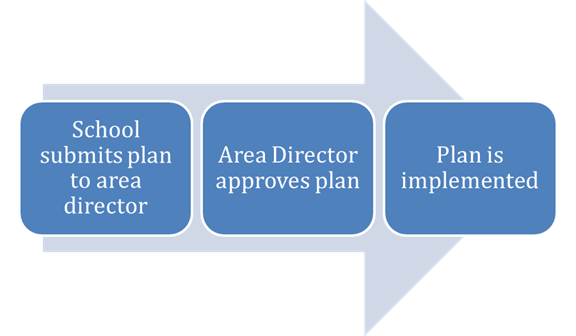
Pathway 1: Area Director Review & Approval
Eligibility: Schools that meet state threshold and meet the district threshold (e.g., 18/24) with no domain below a 3.
Area Director reviews the SIP and provides written feedback and approves plan.
Principals make any minor revisions requested.
Final approval is granted by the Area Director.
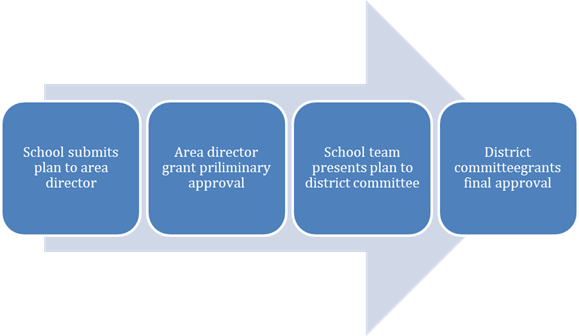
Pathway 2: District-Level Committee Review
Eligibility: SIP does not meet the state threshold.
Area Director reviews the SIP and provides written feedback and approves plan.
A district committee conducts a deeper review.
Principals and their leadership teams participate in a presentation to clarify processes, strategies, needs and expectations.
In necessary, specific revisions and timelines are provided, along with district supports.
After revisions, the revised SIP is approved.
Monitoring & Ongoing Support
All schools submit periodic progress updates aligned to SIP goals.
Area Directors monitor implementation and outcomes.
Schools receiving additional support may have scheduled check-ins and targeted coaching.
What Principals Should Expect
Clear expectations and consistent feedback.
Timely communication regarding review status.
Support aligned to identified needs.
A focus on continuous improvement rather than compliance.
SLCSD School Improvement Plan (SIP) Review Process
This process outlines the submission and approval process for the school improvement plans for schools in Salt Lake City School District.
For a plan to have been deemed successful, the school must meet the state established threshold of either an 1% growth as measured by the accountability metrics or the following points on the accountability metrics:
Elementary/Middle School – 43.5% or higher
High School –46% or higher
Flow Chart(s):
School Meets Threshold
School Does Not Meet Threshold
Salt Lake City School District School Improvement Plan (SIP) Rubric
This rubric is aligned to the SLCSD Strategic Plan for Student Achievement (2024–2029) and supports consistent, equity-centered review of School Improvement Plans.
Domain
Strategic Plan Alignment
1 – Needs Revision
2 – Developing
3 – Proficient
4 – Exemplary
Data Analysis & Root Cause
All Pillars; emphasis on Pillar 1 & 2
Goals & Outcomes
Aligned to Pillar Goals and Board Targets
Strategies & Action Steps
Pillars 1–4 as applicable
Equity & Student Support
Pillar 1: Equity, Access, Student Support
Implementation & Monitoring
All Pillars; Continuous Improvement
Overall Score: ______ / 20
Meets Area Director Approval Threshold? ☐ Yes ☐ No
Please review the guidelines below for dropping students due to consecutive unexcused absences. Requirements differ for General Education and Special Education students.
1. General Education Students
Drop Timeline: A general education student should be dropped on Day 11, after 10 consecutive unexcused absences.
Required Actions: Complete at least one documented intervention before dropping the student.
Acceptable interventions include:
· Phone calls
· Text messages
· Emails
· Home visits
Document all outreach in PowerSchool.
2. Special Education Students
Drop Timeline: A student with an IEP should be dropped on Day 31, after 30 consecutive unexcused absences.
Required Actions:
· Special education teachers must document all attempts to connect with the family.
Creating a Supportive Environment for Muslim Staff and Students During Ramadan."
Ramadan is a special time of spiritual reflection, fasting from dawn to sunset, and increased devotion for Muslims. As a school community, it’s important to foster a welcoming and inclusive atmosphere for Muslim staff and students during this period. Here are some helpful guidelines to ensure everyone feels supported:
Understand Ramadan and Its Practices
Fasting: Muslims refrain from eating, drinking (including water), and sometimes taking medications from dawn (Fajr) until sunset (Maghrib). The fast is typically broken with a meal called Iftar.
Prayer: In addition to the five daily prayers, many Muslims also participate in extra prayers called Taraweeh during the evening. This may lead to less sleep, so it’s important to be mindful of its potential impact on energy levels.
Eid al-Fitr: Ramadan concludes with the celebration of Eid al-Fitr, marked by prayers, family gatherings, and festivities. Muslim staff and students may request time off for this important holiday.
Foster a Flexible and Understanding Environment
Prayer Accommodations: Provide a quiet and private space for Muslim staff and students to pray during the day. Keep in mind that prayer times vary slightly based on the position of the sun.
Flexible Scheduling: Consider offering flexible schedules for fasting staff and students. Whenever possible, avoid scheduling exams, presentations, or physically demanding activities late in the day when energy levels may be lower.
Classroom Sensitivity: When planning classroom activities, such as parties or food-related events, be mindful of students who are fasting and create an environment where they feel comfortable.
Offer Alternatives for Physical Activities
PE Classes: For students who are fasting and may feel tired, allow them to opt-out of physically strenuous activities or participate in modified exercises.
Recess: Younger students who are fasting may prefer to engage in quieter activities during recess. Offer an indoor space where they can rest if needed.
Consider Lunch and Eating Spaces
Respectful Lunchtime Environment: For students who are fasting, offer a quiet space, such as a library or designated room, where they can spend lunchtime if they prefer to avoid the cafeteria.
Staff Breaks: For fasting staff members, ensure they have access to private spaces where they can rest or pray during lunch breaks.
Promote Inclusivity and Awareness
Community Education: Consider offering brief educational sessions or sharing resources about Ramadan to foster understanding and empathy within the school community.
Avoid Assumptions: Not all Muslims observe Ramadan in the same way. Some may not fast due to medical reasons or personal circumstances. Always respect individual choices and allow staff and students to participate as they see fit.
Accommodate for Eid al-Fitr
Time Off for Eid: Make sure Muslim staff and students can take time off to celebrate Eid al-Fitr. Encourage them to communicate their needs in advance to plan accordingly.
Schoolwide Acknowledgement: Consider recognizing Eid al-Fitr through announcements or newsletters, promoting inclusivity and respect for religious diversity within the school.
Communicate and Offer Support
Open Dialogue: Encourage Muslim staff and students to share any specific needs or accommodations they may require during Ramadan. Ensure that everyone feels comfortable discussing their needs with teachers and administrators.
Supportive Tone: Lead with a positive and welcoming tone, making it clear that the school is committed to fostering an inclusive and respectful environment for all religious observances.
By following these steps, the school can create a respectful, supportive, and inclusive atmosphere during Ramadan, showing genuine care for religious diversity and the well-being of all members of the school community.