
LETTERS FOR LEADERSHIP
ADMINISTRATOR NEWSLETTER | Volume 18, Edition 5
Announcements
SLCSD Priorities 2026-27 - Our top priorities highlighted from our strategic plan for student success. (Draft only!!)
Common Expectations – Administrative guiding document for 26-27 school year.
October Cultural Calendar – Record of cultural observances for October
CELEBRATIONS – Please send to leeson.taylor@slcschools.org or angelina.tovar@slcschools.org by Wednesday at 5:00 PM.
West High JROTC Orienteering Celebration
We are proud to share another outstanding accomplishment from our West High students. Our Navy JROTC Orienteering Teams competed at the 2026 Utah JROTC Orienteering State Championships and earned 1st place in every team division: Boys’ Varsity, Girls’ Varsity, Boys’ Junior Varsity, and Girls’ Junior Varsity.
In addition, West cadets earned individual 1st-place finishes in Boys’ and Girls’ Varsity and Boys’ Junior Varsity. Please join me in celebrating our cadets and this remarkable achievement. A special thank you to our JROTC leaders, Jonathan Kehr and Julio Gonzales, for their leadership, support, and commitment to our students.
Bonneville Elementary School
Let’s join the Bonneville Elementary School family in celebrating Kindergarten Teacher Courtney Lee. She was recently recognized by the Utah Education Association with the Excellence in Education Award.
ALL ADMINISTRATORS – Items for all building level administrators
DEADLINES
Final 26-27 Principal Tackle List-September
2026-27 October Principal Tackle List-Final
ACTION ITEMS
Laptop Cart Placement – Classroom laptop carts should not be located next to the door whenever possible. This presents a safety risk in the event the cart catches fire and may also be a tripping hazard as staff and student enter and exit the classroom. Thank you for cooperation.
Registration and Participation in SLCSD 2026-2027 Science and Engineering Fairs – The Salt Lake City School District, in partnership with the Salt Lake Education Foundation, will host the SLCSD Science and Engineering Fair February 1-5, 2027.
Attendance-Based Grade Reductions Report and End of Term Process – For teachers who have elected to use attendance-based grade reductions under HB 502 and have included this practice in their approved course disclosure, IT has developed a report to support implementation.
INFORMATION ITEMS
T&L Instructional Observation & Calibration Walks – Instructional Observation & Calibration Walks will provide principals with regular opportunities to visit classrooms, observe instructional practices, and engage in meaningful professional dialogue with colleagues.
Reminder: Truancy and Compulsory Education Process Guidance – During the July 2026 Administrator Institute, administrators received training on attendance interventions, chronic absenteeism, in-school truancy, and truancy procedures. This memo serves as a reminder of the formal truancy and compulsory education process.
Office Hours for Assessment and Evaluation starting Oct 30, 2026:
FRIDAYS BETWEEN 2PM – 4PM
AVAILABLE IN PERSON AT THE DISTRICT OFFICE or Dedicated Teams Channel
Staff members can answer questions about assessments, help students understand data, and lead discussions to connect student assessment to Tier I instructional choice. Staff will answer questions, help find resources, and set up consultations.
Teacher Growth Reports: updated reports with SGP from USBE will be available in the DDC Assessment & Evaluation School Folders by Monday of next week.
SPED EXTRA - Celebrations, initial referrals, staffing allocation process, safety care training, and more.
High Leverage Practices Course
The High Leverage Practices Course has just undergone a significant update and is available for enrollment again! High-leverage practices are the foundational, research-based instructional behaviors that effective K-12 educators use to optimize student engagement, streamline classroom management, and significantly accelerate academic outcomes. This course moves theory into highly actionable classroom practices and strategies designed to support diverse learner profiles across all learning environments. It is a self-paced, asynchronous course that earns 2 USBE credits. It’s a great way to focus your coaching work for teachers, and there are also microcredentials associated with this course. Please share with your teachers. For more information, contact katie.hill@schools.utah.gov.
Nov. District Attendance Rivalry Challenge.pdf – This is the November attendance newsletter.
Roving Substitute Guidelines -- The purpose of this memo is to provide information regarding the current situation and guidance moving forward to address the needs of support staff (specifically, special education paraprofessionals and PE instructors) and the increased substitute expense.
WPAD Order Information – Guidance regarding wearable panic devices.
USBE Updates
USBE School Leadership Update – Update for admin from USBE
School LAND Trust – The Utah State Board of Education approved amendments to School LAND Trust Program rules on October 1, 2026. The amendments are expected to take effect in early December, pending completion of the state rulemaking process.
USBE is offering training for School Community Councils. Please share the information found here with your school’s SCC Chair.
Fall 2026 Math in Utah Newsletter
SEOP Newsletter – Information for statewide online education program
USBE October Attendance Newsletter – USBE Attendance information for the month of October.
HIGH SCHOOLS – Items for high school administration
DEADLINES
ACTION ITEMS
Updated 2027–28 Master Schedule Timeline – This memo shares the updated timeline for building 2027–28 master schedules. The timeline has two goals: to build master schedules that prioritize students' needs and interests, and to reduce the confusion, frustration, and long waits that students and families have experienced while schedules are finalized in the fall.
It's that time of year again! Under S-10: Administrative Procedures, secondary school SCCs need to review their full school fee list by the end of November, so please make sure fees are on your upcoming SCC agendas.
A few reminders as you plan:
Any new fees or changes to current fees must be discussed in at least two SCC meetings before you move a recommendation forward.
Per the AP, recommendations are due to the Executive Director of School Leadership and Support by January 31; so, please submit your recommendations to your area director by January 16. Each request should list the current fee (if any) and the requested fee, include a rationale for any new fee or increase, and be signed by you and your SCC chair.
Fees can't be more than the actual cost of the activity, course, or program, and one fee can't be raised to cover another.
High school principals: as you review, please think specifically about whether we should increase uniform fees and whether playoff costs (travel, etc.) should be added to your spend plans. Emily and Nomani would appreciate your input on both. We've linked the S-10 AP here for reference. Let your area director know if you have any questions.
INFORMATION ITEMS
Fundraiser Approval Process — Procedures and Responsibilities – This memo outlines the district’s fundraiser approval process under Board Policy G-27 (Fundraising Activities) and Board Policy I-16 (Clubs), and summarizes each stakeholder’s responsibilities. It applies to every school-sponsored fundraiser, and it includes the additional review step that applies at the high school level. Please share this memo with advisors, coaches, and club sponsors at your school, and route questions about specific requests to your Area Director.
Our BSN Sports / Adidas Partnership: What Families, Coaches, and Boosters Need to Know – Information about the District's partnership with BSN Sports and Adidas America, Inc., and to explain how it affects purchases of team gear, so that everyone has clear, consistent guidance.
High School Physical Education Credit for UHSAA Approved Sports – Students who participate in Utah High School Activities Association (UHSAA) sanctioned sports, excluding esports, may earn Physical Education (PE) credit through their athletic participation. This includes participation in UHSAA Unified sports, such as Unified soccer and Unified basketball.
MIDDLE SCHOOLS –Items for middle school administration
DEADLINES
ACTION ITEMS
Updates 2027-28 Master Schedule Timeline -- This memo shares the updated timeline for building 2027–28 master schedules.
INFORMATION ITEMS
ELEMENTARY SCHOOLS – Items for elementary school administration
DEADLINES
ACTION ITEMS
INFORMATION ITEMS
Individualized Reading Plans Available in PowerTeacher – The individualized Reading Plan (IRP) system is now operational and available through PowerTeacher. K–3 teachers can begin using the system to create and maintain IRPs for students who require a plan under SB 241.
Every year, 5th grade students and teachers have the opportunity to travel to Abravanel Hall and hear the Utah Symphony perform. This year, the dates for those concerts include:
Feb 22 at 10 AM – 1800 seats available
Feb 22 at 11:30 AM – 300 seats available
Feb 23 at 10 AM – 760 seats available
Feb 23 at 11:30 AM – 400 seats available
Please have your 5th grade teachers reach out to Amy Burris with the date your school would like to attend no later than October 15, 2027. She will arrange and pay for transportation. This is a unique opportunity for your students because Utah is one of only 17 states with a full-time symphony orchestra in the nation. Plus, this is completely paid for through our state legislature. Please contact Amy right away.
If you'd like more information about this opportunity, you can access this link: https://utahsymphony.org/education/teachers/
Thanks, and Happy Listening 🙂
LEADERSHIP CORNER
SLCSD/School Leadership Alliance(SLA) Overview – Scope & Sequence for this year’s joint sessions for principals.
Accountability Terminology
Exemplary
Meaning: Performance significantly exceeds expectations.
The school demonstrates a high level of performance in the applicable accountability indicators. Student achievement and growth are strong, and evidence indicates that the school is providing effective and equitable educational opportunities.
Commendable
Meaning: Performance meets expectations and demonstrates notable strengths.
The school demonstrates satisfactory to strong performance across relevant measures, with particular strengths in academic achievement or student growth and adequate performance in other required areas.
Typical
Meaning: Performance generally meets basic expectations.
The school demonstrates adequate performance in key accountability measures, although achievement, growth, or equitable outcomes may vary across indicators or student groups.
Developing
Meaning: Performance is below expected levels in important areas.
The school demonstrates developing performance on one or more accountability measures and needs focused attention to improve student achievement, growth, or equitable educational opportunities.
Critical
Meaning: Performance is substantially below expected levels and requires significant improvement.
The school has serious needs in one or more accountability measures. Results signal the importance of targeted support, analysis of root causes, stronger implementation of effective practices, and close monitoring of student outcomes.
Educational Leadership Terminology
Quick fixing – Jumping into solutions instead of listening.
Steam Rolling – Monopolizing the dialogue without regard for others’ input.
Box Checking – Going through the motions without genuine care.
Cherry Picking – Only hearing what confirms your own view.
Dignity Documents
The 10 Elements of Dignity
The 10 Temptations to Violate Dignity
RESOURCES AVAILABLE FOR SCHOOLS FROM DISTRICT DEPARTMENTS
Assessment Essentials
SPED Scoop – Special Education Newsletter
Student Services Resources
Student Services October Newsletter
Teaching & Learning
Salt Lake Education Foundation
School Leadership & Support
Administrative Memos
CTE_Teachers SharePoint: https://slcsd.sharepoint.com/sites/CTE_Teachers
*Unless otherwise requested, information will run for 2 weeks only.
**We are working on formatting to ease use, add clarity and increase access
Category: Superintendent
Attendance-Based Grade Reductions Report and End of Term Process
ADMINISTRATIVE MEMORANDUM
To: Secondary School Principals and Teachers
From: Dr. Bri Conley, Director of Educational Equity & Access
Date: October 19, 2026
Subject: Attendance-Based Grade Reductions Report and End of Term Process
For teachers who have elected to use attendance-based grade reductions under HB 502 and have included this practice in their approved course disclosure, IT has developed a report to support implementation. The Grade Adjustment Video provides step-by-step instructions for accessing the report and applying an attendance-based grade reduction.
Please remember the following:
- Attendance-based grade reductions are optional.
- A student must have 5 or more unexcused absences during the grading term to be eligible for a grade reduction.
- Parents/guardians have a week to excuse their student’s absence.
- Absences beyond the one-week grace period may be excused at the principal’s discretion only when extenuating circumstances exist or a district attendance coding error has occurred.
- At this time, unexcused tardies may not be used to determine eligibility for an attendance-based grade reduction.
- Teachers may reduce a student's grade by up to, but no more than, 10% of the total points available for the course during the grading term.
- Any attendance-based grade reduction must be included in the teacher's approved course disclosure document.
- The attendance columns are a new feature that PowerSchool has added to the gradebook for reference. Those columns should not be used for adjusting a student’s grade because they do not differentiate between an unexcused and excused absence or tardy. They are simply a count of all absences or tardies for that class. If a teacher wants to see a report of unexcused absences, they can use Analytics and Insights by clicking on the waffle menu in the top right corner.
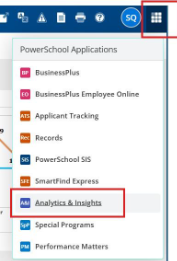
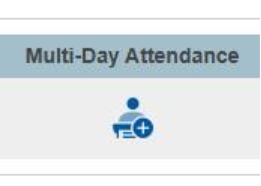
The unexcused absence should be the first report that loads after clicking on that link. One thing to note, however, that report does not consider the 1 week grace period that families have to excuse an absence. So, you could see a student with 5 unexcused absences, but the 5th absence occurred yesterday. If teachers go into their multi-Day attendance view for each class, they can see when the last unexcused absence was to determine if it was longer than the 1 week day grace period.
The video demonstrates how to:
- Run the attendance report in Analytics & Insights.
- Review the number of unexcused absences by class period.
- Identify students who meet the eligibility threshold of five or more unexcused absences.
- Create an assignment in the gradebook that can be used to apply the attendance-
based grade reduction.
If you have questions about attendance, please reach out to Bri.conley@slcschools.org.
For grade-related questions, please reach out to Dr. Tiffany Hall at tiffany.hall@slcschools.org.
Registration and Participation in SLCSD 2026-2027 Science and Engineering Fairs
Title: Registration for SLCSD 2026-2027 Science and Engineering Fairs
Date: October 13, 2026
To: School Administrators
From: Holley McIntosh, District Science, Technology, Engineering and Math (STEM) Director
Tiffany Hall, Executive Director of Teaching and Learning
Summary:
The Salt Lake City School District, in partnership with the Salt Lake Education Foundation, will host the SLCSD Science and Engineering Fair February 1-5, 2027. The SLCSD fair provides district level judging for students’ science, computer science, and engineering projects for students in grades 5-12. Participation in the SLCSD Science and Engineering Fair is determined by students advancing from their school-level fair. Projects that receive awards at the SLCSD Science and Engineering Fair will advance to the next level of competition.
All schools, participating or not, need to complete the School Participation Survey by October 31, 2026, so the district fair can accommodate eligible participants. Participating schools need to complete their school-level fair by January 25, 2027.
Rationale:
Science and engineering fairs provide valuable opportunities for students to develop critical thinking, problem solving, communication, and scientific inquiry skills while supporting the district's Strategic Plan for Student Achievement through equitable access to meaningful STEM experiences.
Expectations for Implementation:
1. Communication
- Share this information with teachers in grades 5-12.
- Determine if your school will hold a school-level Science and Engineering Fair.
- Complete the School Participation Survey by October 31, 2026.
2. Additional Resources
- Additional Science and Engineering Fair resources are available in the District Document Center.
- Consult the District Science Fair Handbook. This is also available in the District Document Center.
3. Support
- Contact Holley McIntosh at holley.mcintosh@slcschools.org with questions about the SLCSD Science and Engineering Fair.
- Contact Summer Pelton, SLCSD District Science Coach, at summer.pelton@slcschools.org or Kristen Bonner, SLCSD Science and Engineering Fair Coordinator, at kristen.bonner_contractor@slcschools.org if you would like assistance or guidance on conducting a school science fair.
Keywords: STEM, Science and Engineering Fair, District Science Fair Handbook, STEM experiences, STEM identity
Letters for Leadership v.16, e.5
LETTERS FOR LEADERSHIP
ADMINISTRATOR NEWSLETTER | Volume 16, Edition 5
Announcements
- SLCSD Priorities 2026-27 - Our top priorities highlighted from our strategic plan for student success. (Draft only!!)
- Common Expectations – Administrative guiding document for 26-27 school year.
- October Cultural Calendar – Record of cultural observances for October
- Friday, September 25 is a non-student day and the annual Office Professionals Conference at Hillside 8:00am-3:00pm. All contract office Professionals should be in attendance.
CELEBRATIONS – Please send to leeson.taylor@slcschools.org or angelina.tovar@slcschools.org by Wednesday at 5:00 PM.
Skyview Celebration
Sky View Academy received the Education Partner of the Year Award from Davis Technical College for our ongoing partnership at the Utah State Prison last Wednesday.
West Student Published in the SL Tribune
West's own Ananya Pallinti had a published editorial in the Salt Lake Tribune recently, sharing thoughts about Utah's Financial Literacy course. Talented and bright West High Junior!
West Unified Sports
Congrats to the students, Coach Haily & Coach Vea for qualifying to play at the Special Olympics State Championships! Great job!!!!
Bonneville Elementary School
Let’s join the Bonneville Elementary School family in celebrating Kindergarten Teacher Courtney Lee. She was recently recognized by the Utah Education Association with the Excellence in Education Award.
ALL ADMINISTRATORS – Items for all building level administrators
- DEADLINES
- ACTION ITEMS
- Laptop Cart Placement – Classroom laptop carts should not be located next to the door whenever possible. This presents a safety risk in the event the cart catches fire and may also be a tripping hazard as staff and student enter and exit the classroom. Thank you for cooperation.
- INFORMATION ITEMS
- T&L Instructional Observation & Calibration Walks – Instructional Observation & Calibration Walks will provide principals with regular opportunities to visit classrooms, observe instructional practices, and engage in meaningful professional dialogue with colleagues.
- Reminder: Truancy and Compulsory Education Process Guidance – During the July 2026 Administrator Institute, administrators received training on attendance interventions, chronic absenteeism, in-school truancy, and truancy procedures. This memo serves as a reminder of the formal truancy and compulsory education process.
- HB 273 Classroom Technology Amendments -- H.B. 273 establishes statewide requirements for balanced classroom technology use and artificial intelligence (AI) in Utah public schools. During the 2026-27 school year, the USBE will create a model policy outlining the allowable use of technology and artificial intelligence (AI) in the classroom. When the policy is completed, districts will review their current practices and create their own policies and administrative procedures to ensure compliance. No changes are required in our current school or classroom practices during the 2026-27 school year.
- SPED EXTRA - Celebrations, initial referrals, staffing allocation process, safety care training, and more.
- High Leverage Practices Course
- The High Leverage Practices Course has just undergone a significant update and is available for enrollment again! High-leverage practices are the foundational, research-based instructional behaviors that effective K-12 educators use to optimize student engagement, streamline classroom management, and significantly accelerate academic outcomes. This course moves theory into highly actionable classroom practices and strategies designed to support diverse learner profiles across all learning environments. It is a self-paced, asynchronous course that earns 2 USBE credits.It’s a great way to focus your coaching work for teachers, and there are also microcredentials associated with this course. Please share with your teachers. For more information, contact katie.hill@schools.utah.gov.
- October 2026 Attendance Update Final.pdf – This is the October attendance newsletter.
- Roving Substitute Guidelines -- The purpose of this memo is to provide information regarding the current situation and guidance moving forward to address the needs of support staff (specifically, special education paraprofessionals and PE instructors) and the increased substitute expense.
- WPAD Order Information – Guidance regarding wearable panic devices.
USBE Updates
- USBE School Leadership Update – Update for admin from USBE
- School LAND Trust – The School LAND Trust Fall Requirements Form is due October 20, 2026, just one week away. Please ensure you have submitted your forms by the deadline.
- USBE is offering training for School Community Councils. Please share the information found here with your school’s SCC Chair.
- Fall 2026 Math in Utah Newsletter
- SEOP Newsletter – August newsletter
- USBE October Attendance Newsletter – USBE Attendance information for the month of October.
HIGH SCHOOLS – Items for high school administration
- DEADLINES
- Faculty sponsors, head coaches, and administrators planning overnight trips for Spring 2027 that were not approved last spring must submit the online I-19D form found here by Wednesday, October 21, 2026 (please note that some trip requests require additional conversation and may not be immediately approved--the sooner you can get them submitted so we can start our review process, the better). Please use our new Overnight / Extended Trip Checklist to guide trip planning and the approval process. The checklist, online I-19D form, and related resources are available on the district’s Overnight and Extended Trips or Activities webpage. Please share this information with staff planning spring trips so they can complete the required steps by the deadlines.
- ACTION ITEMS
- Updated 2027–28 Master Schedule Timeline – This memo shares the updated timeline for building 2027–28 master schedules. The timeline has two goals: to build master schedules that prioritize students' needs and interests, and to reduce the confusion, frustration, and long waits that students and families have experienced while schedules are finalized in the fall.
- INFORMATION ITEMS
- Fundraiser Approval Process — Procedures and Responsibilities – This memo outlines the district’s fundraiser approval process under Board Policy G-27 (Fundraising Activities) and Board Policy I-16 (Clubs), and summarizes each stakeholder’s responsibilities. It applies to every school-sponsored fundraiser, and it includes the additional review step that applies at the high school level. Please share this memo with advisors, coaches, and club sponsors at your school, and route questions about specific requests to your Area Director.
- Our BSN Sports / Adidas Partnership: What Families, Coaches, and Boosters Need to Know – Information about the District's partnership with BSN Sports and Adidas America, Inc., and to explain how it affects purchases of team gear, so that everyone has clear, consistent guidance.
- High School Physical Education Credit for UHSAA Approved Sports – Students who participate in Utah High School Activities Association (UHSAA) sanctioned sports, excluding esports, may earn Physical Education (PE) credit through their athletic participation. This includes participation in UHSAA Unified sports, such as Unified soccer and Unified basketball.
MIDDLE SCHOOLS –Items for middle school administration
- DEADLINES
- ACTION ITEMS
- Updates 2027-28 Master Schedule Timeline -- This memo shares the updated timeline for building 2027–28 master schedules.
- INFORMATION ITEMS
ELEMENTARY SCHOOLS – Items for elementary school administration
- DEADLINES
- ACTION ITEMS
- INFORMATION ITEMS
- Individualized Reading Plans Available in PowerTeacher – The individualized Reading Plan (IRP) system is now operational and available through PowerTeacher. K–3 teachers can begin using the system to create and maintain IRPs for students who require a plan under SB 241.
- Every year, 5th grade students and teachers have the opportunity to travel to Abravanel Hall and hear the Utah Symphony perform. This year, the dates for those concerts include:
- Feb 22 at 10 AM – 1800 seats available
- Feb 22 at 11:30 AM – 300 seats available
- Feb 23 at 10 AM – 760 seats available
- Feb 23 at 11:30 AM – 400 seats available
- Please have your 5th grade teachers reach out to Amy Burris with the date your school would like to attend no later than October 15, 2027. She will arrange and pay for transportation. This is a unique opportunity for your students because Utah is one of only 17 states with a full-time symphony orchestra in the nation. Plus, this is completely paid for through our state legislature. Please contact Amy right away.
- If you'd like more information about this opportunity, you can access this link: https://utahsymphony.org/education/teachers/
- Thanks, and Happy Listening 🙂
LEADERSHIP CORNER
- SLCSD/School Leadership Alliance(SLA) Overview – Scope & Sequence for this year’s joint sessions for principals.
- Accountability Terminology
- Exemplary
- Meaning: Performance significantly exceeds expectations.
- The school demonstrates a high level of performance in the applicable accountability indicators. Student achievement and growth are strong, and evidence indicates that the school is providing effective and equitable educational opportunities.
- Commendable
- Meaning: Performance meets expectations and demonstrates notable strengths.
- The school demonstrates satisfactory to strong performance across relevant measures, with particular strengths in academic achievement or student growth and adequate performance in other required areas.
- Typical
- Meaning: Performance generally meets basic expectations.
- The school demonstrates adequate performance in key accountability measures, although achievement, growth, or equitable outcomes may vary across indicators or student groups.
- Developing
- Meaning: Performance is below expected levels in important areas.
- The school demonstrates developing performance on one or more accountability measures and needs focused attention to improve student achievement, growth, or equitable educational opportunities.
- Critical
- Meaning: Performance is substantially below expected levels and requires significant improvement.
- The school has serious needs in one or more accountability measures. Results signal the importance of targeted support, analysis of root causes, stronger implementation of effective practices, and close monitoring of student outcomes.
- Exemplary
- Educational Leadership Terminology
- Quick fixing – Jumping into solutions instead of listening.
- Steam Rolling – Monopolizing the dialogue without regard for others’ input.
- Box Checking – Going through the motions without genuine care.
- Cherry Picking – Only hearing what confirms your own view.
- Dignity Documents
RESOURCES AVAILABLE FOR SCHOOLS FROM DISTRICT DEPARTMENTS
- Assessment Essentials
- SPED Scoop – Special Education Newsletter
- Student Services Resources
- Teaching & Learning
- Salt Lake Education Foundation
- School Leadership & Support
- CTE_Teachers SharePoint: https://slcsd.sharepoint.com/sites/CTE_Teachers
*Unless otherwise requested, information will run for 2 weeks only.
**We are working on formatting to ease use, add clarity and increase access
How to use an NG or I when evaluating student performance
Title: Using an NG or I on the report card - reminder
Date: October 10, 2026
To: High School Administrators
From: Tiffany Hall
Teaching & Learning
Summary: How to use an NG or I when evaluating student performance
GRADE DESIGNATIONS
The NG designation is used when a student has not attended enough of a class to demonstrate achievement of the learning objectives. This may occur due to excessive absences or late entry into the course, as outlined in Administrative Procedure I-8: Student Progress and Academic Achievement. An NG does not carry credit or grade points
An “I” is used when a student has participated sufficiently in the course to demonstrate learning but is missing significant work. The teacher expects that the student can still complete the missing work and demonstrate mastery. Once completed, the I is replaced with a grade and the appropriate credit is awarded. After one term, the I will be replaced automatically with an F. A student can still apply for a grade change, but after a term the “F” will be on the report card and calculated in the GPA.
Section IV.H. Assigning a ‘No Grade’ (NG)
- A NG can replace a letter grade when a student has an excused absence longer than 10 days but cannot be used as a consequence for unexcused absences.
- The NG marking may be used as outlined in Section III.A.3.b.
- The NG should not be used to avoid assigning an ‘F’ grade.
- An NG does not convey credit or affect a student's grade point average.
Section III.A.3.b Students who transfer in after the midterm without a grade will be assigned a ‘no grade’ (NG). If there are extenuating circumstances and the students can demonstrate sufficient mastery of the content, the teacher may use their discretion to determine if a ‘P’ would be an appropriate option. A ‘P’ conveys credit for graduation but does not affect the grade point average.
Rationale:
During the pandemic (2019-20, 2020-21), teachers used the NG when students were not participating in school. This decision reflected concerns from teachers and administrators that many students were not able to access online instruction consistently, and therefore, an “F” was not an appropriate representation of their learning.
Following this period, some teachers continued using the NG for students who were attending class but not achieving academically, substituting it for an “F.” This was not aligned with Administrative Procedure I-8.
In 2024-25, schools were reminded that the NG may not be used in place of an “F.” An email was sent to administrators, counselors, and teachers in October 2024 reinforcing this expectation. This was to be implemented by the start of the 2025-26 school year.
CREDIT RECOVERY
Credit recovery has recognized NGs as Fs and allowed credit recovery to be assigned. However, NGs earned in 2025-26 and beyond are not considered Fs and eligible for credit recovery. This is because credit recovery is based on the student completing an original credit class and recovery key learning, and the NG means that they were not in the course for sufficient time to evaluate key learning.
The credit recovery system should recognize an NG granted in before this year (2025-26) as an F and grant access to CR courses. IF IT DOES NOT, please use the blue "+credit recovery button" and use "NG from 202X-XX not recognized." That will be checked and assigned if appropriate.
Keywords: NG, I, report card, grades
Letters for Leadership v.15, e.5
Announcements
SLCSD Priorities 2026-27 - Our top priorities highlighted from our strategic plan for student success. (Draft only!!)
Common Expectations – Administrative guiding document for 26-27 school year.
October Cultural Calendar – Record of cultural observances for October
Friday, September 25 is a non-student day and the annual Office Professionals Conference at Hillside 8:00am-3:00pm. All contract office Professionals should be in attendance.
CELEBRATIONS – Please send to leeson.taylor@slcschools.org or angelina.tovar@slcschools.org by Wednesday at 5:00 PM.
West Student Published in the SL Tribune
West's own Ananya Pallinti had a published editorial in the Salt Lake Tribune recently, sharing thoughts about Utah's Financial Literacy course. Talented and bright West High Junior!
West Unified Sports
Congrats to the students, Coach Haily & Coach Vea for qualifying to play at the Special Olympics State Championships! Great job!!!!
Bonneville Elementary School
Let’s join the Bonneville Elementary School family in celebrating Kindergarten Teacher Courtney Lee. She was recently recognized by the Utah Education Association with the Excellence in Education Award.
ALL ADMINISTRATORS – Items for all building level administrators
DEADLINES
Final 26-27 Principal Tackle List-September
2026-27 October Principal Tackle List-Final
ACTION ITEMS
INFORMATION ITEMS
T&L Instructional Observation & Calibration Walks – Instructional Observation & Calibration Walks will provide principals with regular opportunities to visit classrooms, observe instructional practices, and engage in meaningful professional dialogue with colleagues.
HB 273 Classroom Technology Amendments -- H.B. 273 establishes statewide requirements for balanced classroom technology use and artificial intelligence (AI) in Utah public schools. During the 2026-27 school year, the USBE will create a model policy outlining the allowable use of technology and artificial intelligence (AI) in the classroom. When the policy is completed, districts will review their current practices and create their own policies and administrative procedures to ensure compliance. No changes are required in our current school or classroom practices during the 2026-27 school year.
October 2026 Attendance Update Final.pdf – This is the October attendance newsletter.
Roving Substitute Guidelines -- The purpose of this memo is to provide information regarding the current situation and guidance moving forward to address the needs of support staff (specifically, special education paraprofessionals and PE instructors) and the increased substitute expense.
WPAD Order Information – Guidance regarding wearable panic devices.
Student Services Newsletter – This is the monthly newsletter from Student Services.
CTE September News – Monthly newsletter from CTE.
USBE Updates
USBE School Leadership Update – Update for admin from USBE
School LAND Trust – A message from our friends at the Trust Lands Administration (TLA)—the agency responsible for managing Utah’s trust lands to generate revenue for public school beneficiaries.
SEOP Newsletter – August newsletter
USBE October Attendance Newsletter – USBE Attendance information for the month of October.
HIGH SCHOOLS – Items for high school administration
DEADLINES
Faculty sponsors, head coaches, and administrators planning overnight trips for Spring 2027 that were not approved last spring must submit the online I-19D form found here by Wednesday, October 21, 2026 (please note that some trip requests require additional conversation and may not be immediately approved--the sooner you can get them submitted so we can start our review process, the better). Please use our new Overnight / Extended Trip Checklist to guide trip planning and the approval process. The checklist, online I-19D form, and related resources are available on the district’s Overnight and Extended Trips or Activities webpage. Please share this information with staff planning spring trips so they can complete the required steps by the deadlines.
ACTION ITEMS
Updated 2027–28 Master Schedule Timeline – This memo shares the updated timeline for building 2027–28 master schedules. The timeline has two goals: to build master schedules that prioritize students' needs and interests, and to reduce the confusion, frustration, and long waits that students and families have experienced while schedules are finalized in the fall.
INFORMATION ITEMS
Fundraiser Approval Process — Procedures and Responsibilities – This memo outlines the district’s fundraiser approval process under Board Policy G-27 (Fundraising Activities) and Board Policy I-16 (Clubs), and summarizes each stakeholder’s responsibilities. It applies to every school-sponsored fundraiser, and it includes the additional review step that applies at the high school level. Please share this memo with advisors, coaches, and club sponsors at your school, and route questions about specific requests to your Area Director.
Our BSN Sports / Adidas Partnership: What Families, Coaches, and Boosters Need to Know – Information about the District's partnership with BSN Sports and Adidas America, Inc., and to explain how it affects purchases of team gear, so that everyone has clear, consistent guidance.
High School Physical Education Credit for UHSAA Approved Sports – Students who participate in Utah High School Activities Association (UHSAA) sanctioned sports, excluding esports, may earn Physical Education (PE) credit through their athletic participation. This includes participation in UHSAA Unified sports, such as Unified soccer and Unified basketball.
MIDDLE SCHOOLS –Items for middle school administration
DEADLINES
ACTION ITEMS
Updates 2027-28 Master Schedule Timeline -- This memo shares the updated timeline for building 2027–28 master schedules.
INFORMATION ITEMS
ELEMENTARY SCHOOLS – Items for elementary school administration
DEADLINES
ACTION ITEMS
INFORMATION ITEMS
Individualized Reading Plans Available in PowerTeacher – The individualized Reading Plan (IRP) system is now operational and available through PowerTeacher. K–3 teachers can begin using the system to create and maintain IRPs for students who require a plan under SB 241.
Every year, 5th grade students and teachers have the opportunity to travel to Abravanel Hall and hear the Utah Symphony perform. This year, the dates for those concerts include:
Feb 22 at 10 AM – 1800 seats available
Feb 22 at 11:30 AM – 300 seats available
Feb 23 at 10 AM – 760 seats available
Feb 23 at 11:30 AM – 400 seats available
Please have your 5th grade teachers reach out to Amy Burris with the date your school would like to attend no later than October 15, 2027. She will arrange and pay for transportation. This is a unique opportunity for your students because Utah is one of only 17 states with a full-time symphony orchestra in the nation. Plus, this is completely paid for through our state legislature. Please contact Amy right away.
If you'd like more information about this opportunity, you can access this link: https://utahsymphony.org/education/teachers/
Thanks, and Happy Listening 🙂
LEADERSHIP CORNER
SLCSD/School Leadership Alliance(SLA) Overview – Scope & Sequence for this year’s joint sessions for principals.
Educational Leadership Terminology
Quick fixing – Jumping into solutions instead of listening.
Steam Rolling – Monopolizing the dialogue without regard for others’ input.
Box Checking – Going through the motions without genuine care.
Cherry Picking -- Only hearing what confirms your own view.
RESOURCES AVAILABLE FOR SCHOOLS FROM DISTRICT DEPARTMENTS
Assessment Essentials
SPED Scoop – Special Education Newsletter
Student Services Resources
Student Services October Newsletter
Teaching & Learning
Salt Lake Education Foundation
School Leadership & Support
Administrative Memos
CTE_Teachers SharePoint: https://slcsd.sharepoint.com/sites/CTE_Teachers
*Unless otherwise requested, information will run for 2 weeks only.
**We are working on formatting to ease use, add clarity and increase access
Letters for Leadership, v.14, e.5
Announcements
SLCSD Priorities 2026-27 - Our top priorities highlighted from our strategic plan for student success. (Draft only!!)
Common Expectations – Administrative guiding document for 26-27 school year.
October Cultural Calendar – Record of cultural observances for October
Friday, September 25 is a non-student day and the annual Office Professionals Conference at Hillside 8:00am-3:00pm. All contract office Professionals should be in attendance.
CELEBRATIONS – Please send to leeson.taylor@slcschools.org or angelina.tovar@slcschools.org by Wednesday at 5:00 PM.
West Latinos in Action (LIA)
We are proud to celebrate our Latinos in Action students!
Our students had the opportunity to attend a recent City Council meeting and represent Latinos in Action as they received a recognition on behalf of the organization, alongside LIA from East High School. Their participation reflects the leadership, commitment, and community involvement that LIA encourages in our students.
Congratulations to our students for representing West High School and Latinos in Action with pride!
Bonneville Elementary School
Let’s join the Bonneville Elementary School family in celebrating Kindergarten Teacher Courtney Lee. She was recently recognized by the Utah Education Association with the Excellence in Education Award.
ALL ADMINISTRATORS – Items for all building level administrators
DEADLINES
Final 26-27 Principal Tackle List-September
ACTION ITEMS
INFORMATION ITEMS
Assessment Essentials
Please look through Assessment Essentials for information on current and upcoming Federal, State, and District required assessments. For questions, please reach out to Dr. Patrick Jefferies, Assessment Supervisor-Assessment & Evaluation (patrick.jefferies@slcschools.org)
October 2026 Attendance Update Final.pdf – This is the October attendance newsletter.
Roving Substitute Guidelines -- The purpose of this memo is to provide information regarding the current situation and guidance moving forward to address the needs of support staff (specifically, special education paraprofessionals and PE instructors) and the increased substitute expense.
WPAD Order Information – Guidance regarding wearable panic devices.
Student Services Newsletter – This is the monthly newsletter from Student Services.
CTE September News – Monthly newsletter from CTE.
USBE Updates
***USBE School Leadership Conference*** Registration is now open!
Two locations to choose from:
November 9, CEDAR CITY (Courtyard by Marriott): REGISTER
November 12, Salt Lake City (SLCC): REGISTER
Topics will include: School Safety, Special Education, School Improvement, New Leader Training
Fee: $25 (for lunch)
Time: 8:30am - 3:30pm (both locations)
For all school leaders and those who support school leaders!
For more information, contact quinn.kellis@schools.utah.gov
School LAND Trust – A message from our friends at the Trust Lands Administration (TLA)—the agency responsible for managing Utah’s trust lands to generate revenue for public school beneficiaries.
SEOP Newsletter – August newsletter
USBE October Attendance Newsletter – USBE Attendance information for the month of October.
HIGH SCHOOLS – Items for high school administration
DEADLINES
Faculty sponsors, head coaches, and administrators planning overnight trips for Spring 2027 that were not approved last spring must submit the online I-19D form found here by Wednesday, October 21, 2026 (please note that some trip requests require additional conversation and may not be immediately approved--the sooner you can get them submitted so we can start our review process, the better). Please use our new Overnight / Extended Trip Checklist to guide trip planning and the approval process. The checklist, online I-19D form, and related resources are available on the district’s Overnight and Extended Trips or Activities webpage. Please share this information with staff planning spring trips so they can complete the required steps by the deadlines.
ACTION ITEMS
Updated 2027–28 Master Schedule Timeline – This memo shares the updated timeline for building 2027–28 master schedules. The timeline has two goals: to build master schedules that prioritize students' needs and interests, and to reduce the confusion, frustration, and long waits that students and families have experienced while schedules are finalized in the fall.
INFORMATION ITEMS
Fundraiser Approval Process — Procedures and Responsibilities – This memo outlines the district’s fundraiser approval process under Board Policy G-27 (Fundraising Activities) and Board Policy I-16 (Clubs), and summarizes each stakeholder’s responsibilities. It applies to every school-sponsored fundraiser, and it includes the additional review step that applies at the high school level. Please share this memo with advisors, coaches, and club sponsors at your school, and route questions about specific requests to your Area Director.
MIDDLE SCHOOLS –Items for middle school administration
DEADLINES
ACTION ITEMS
INFORMATION ITEMS
ELEMENTARY SCHOOLS – Items for elementary school administration
DEADLINES
ACTION ITEMS
INFORMATION ITEMS
Individualized Reading Plans Available in PowerTeacher – The individualized Reading Plan (IRP) system is now operational and available through PowerTeacher. K–3 teachers can begin using the system to create and maintain IRPs for students who require a plan under SB 241.
Every year, 5th grade students and teachers have the opportunity to travel to Abravanel Hall and hear the Utah Symphony perform. This year, the dates for those concerts include:
Feb 22 at 10 AM – 1800 seats available
Feb 22 at 11:30 AM – 300 seats available
Feb 23 at 10 AM – 760 seats available
Feb 23 at 11:30 AM – 400 seats available
Please have your 5th grade teachers reach out to Amy Burris with the date your school would like to attend no later than October 15, 2027. She will arrange and pay for transportation. This is a unique opportunity for your students because Utah is one of only 17 states with a full-time symphony orchestra in the nation. Plus, this is completely paid for through our state legislature. Please contact Amy right away.
If you'd like more information about this opportunity, you can access this link: https://utahsymphony.org/education/teachers/
Thanks, and Happy Listening 🙂
LEADERSHIP CORNER
SLCSD/School Leadership Alliance(SLA) Overview – Scope & Sequence for this year’s joint sessions for principals.
Educational Leadership Terminology
Quick fixing – Jumping into solutions instead of listening.
Steam Rolling – Monopolizing the dialogue without regard for others’ input.
Box Checking – Going through the motions without genuine care.
Cherry Picking -- Only hearing what confirms your own view.
RESOURCES AVAILABLE FOR SCHOOLS FROM DISTRICT DEPARTMENTS
SPED Scoop – Special Education Newsletter
Student Services Resources
Teaching & Learning
Salt Lake Education Foundation
School Leadership & Support
Administrative Memos
CTE_Teachers SharePoint: https://slcsd.sharepoint.com/sites/CTE_Teachers
*Unless otherwise requested, information will run for 2 weeks only.
Fundraiser Approval Process — Procedures and Responsibilities
SALT LAKE CITY SCHOOL DISTRICT
Office of School Leadership and Support
MEMORANDUM
TO: High School Administrators (Principals and Assistant Principals)
FROM: Office of School Leadership and Support
DATE: September 30, 2026
RE: Fundraiser Approval Process — Procedures and Responsibilities
This memo outlines the district’s fundraiser approval process under Board Policy G-27 (Fundraising Activities) and Board Policy I-16 (Clubs), and summarizes each stakeholder’s responsibilities. It applies to every school-sponsored fundraiser, and it includes the additional review step that applies at the high school level. Please share this memo with advisors, coaches, and club sponsors at your school, and route questions about specific requests to your Area Director.
Three flowcharts are attached — one each for coaches, club sponsors, and parents or community members — along with the full district checklist they are built from. Coaches and club sponsors should keep their flowchart on hand when planning a fundraiser; front-office staff may find it useful to share the parent version with families who have questions.
THE APPROVAL PATH
Every request moves from the advisor (adult faculty/staff) to the Area Director for final approval, with parents notified twice along the way. At high schools, the Athletics and Activities Supervisor reviews the request before the Area Director grants approval.
1. Advisor submits in SuccessFund. The teacher, coach, or club advisor identifies why the school is fundraising and exactly what the funds will be spent on, confirms the request is an allowable purpose, and submits the request through SuccessFund.
2. Principal reviews. The principal checks the request against law, board policy, and school procedures, confirms it does not put students at risk of injury or the school at risk of financial loss, and confirms equitable benefit for male and female student athletes where Title IX applies. If appropriate, then the principal approves.
3. Athletics and Activities Supervisor reviews (high schools only). This review sits between the principal and the Area Director and applies to every high school request, not only athletics fundraisers. After vetting the request, the Activities Supervisor submits the request to the Area Director.
4. Area Director give final approval to fundraiser applications. Advisors may appeal a denied or limited fundraiser to the Executive Director of School Leadership and Support (EDSLS), whose decision is final.
5. Fundraiser runs; evaluation submitted. After the fundraiser ends, the advisor submits Form G-27: Fundraising Evaluation to the principal.
PARENT NOTIFICATION
All parents of participating students are notified twice about the requested fundraiser: At least 30 calendar days before the event, when the fundraiser is proposed, and again at least 15 calendar days before the event, once it is approved, with the type of activity, what the funds will buy, and the estimated time commitment.
SCHOOL AND STUDENT CLUBS (POLICY I-16)
School (curricular) clubs are eligible to use school-sponsored fundraising and a school financial account. Student (noncurricular) clubs cannot take part in school-sponsored fundraising; they may raise funds independently but must state in writing, in all materials, that the club is not school-sponsored. If a fundraiser is tied to club membership, parents/guardians must sign the district-approved parental consent form granting permission for their child to participate.
PRINCIPAL RESPONSIBILITIES
- Set school-specific fundraising procedures and a yearly cap on school-wide or group fundraisers.
- Review each request for compliance with law, board policy, and these procedures.
- Confirm the request does not put students at risk of injury or the school at risk of financial loss, and confirm Title IX equity for athletics.
- Approve, then forward to the Athletics and Activities Supervisor and the Area Director.
- Give written permission if a group wants to pre-pay for resale merchandise.
- Review fundraising account balances with each activity’s sponsor every year.
- Charitable fundraisers: work with the School Community Council on charity selection, confirm the charity is a 501(c)(3) in existence 5+ years, and obtain the superintendent or designee’s approval before any funds are collected. Only one school-wide charitable fundraiser is allowed per year.
- Clubs: give the School Community Council an annual report on authorized clubs, including additions and drops, and apply bulletin board, PA system, and newspaper access equally to all student clubs.
- Ensure that the supporting materials are posted via websites, newsletters, other appropriate avenues for access by the school community.
NEVER APPROVABLE
Any of the following is an automatic red flag and should not be approved:
| Raffles of any kind — illegal in Utah Door-to-door fundraising to strangers Required individual fundraising or fundraising quotas Funding textbooks, supplies, regular home-to-school transportation, or building or classroom construction Bonuses, compensation or gifts to coaches or staff from fundraising proceeds Publicly posting individual student fundraising performance Unapproved crowdfunding or online platforms Missing instructional time to fundraise |
In addition, if an outside organization is collecting funds from an illegal activity (e.g. a raffle), the school cannot accept funds from that fundraiser.
KEY FORMS AND REFERENCES
| Form or Policy | Used For |
| Form G-27: Fundraising Proposal | Submitting a new request in SuccessFund |
| Form G-27: Fundraising Evaluation | Reporting after the fundraiser ends |
| District list of approved digital fundraising platforms | Any third-party or online fundraising, including crowdfunding |
| Board Policy G-3 (Wellness) | Food-sale fundraisers |
| Board Policy S-10 (Student Fees and Fee Waivers) | Fee-related fundraising |
| USBE Fundraisers: Guidance Document on School Fees | Required vs. voluntary fundraisers |
| Board Policy I-19 (Overnight and Extended Trips) | Travel fundraising |
| Board Policy C-4 (Community Use of Facilities) | Personal fundraising using school facilities |
OTHER LINKS
- Fundraiser Approval Process — Checklist by Stakeholder (district reference document)
- Fundraiser Approval Flowchart — For Coaches
- Fundraiser Approval Flowchart — For Club Sponsors
- Fundraiser Approval Flowchart — For Parents & Community Members
Questions about a specific request should go to your Area Director. Questions about these procedures generally may be directed to the Office of School Leadership and Support.
Updated 2027–28 Master Schedule Timeline
MEMORANDUM
TO: High School Administrators
FROM: School Leadership and Support
DATE: September 29, 2026
RE: Updated 2027–28 Master Schedule Timeline
Purpose
This memo shares the updated timeline for building 2027–28 master schedules. The timeline has two goals: to build master schedules that prioritize students' needs and interests, and to reduce the confusion, frustration, and long waits that students and families have experienced while schedules are finalized in the fall.
Meeting these goals depends on every step being anticipated and planned for well in advance. Please review the full timeline with your counseling team and front office staff, build these dates into your school calendar now, and plan your communication to students and families around each milestone.
Key Dates at a Glance
- Oct. 8, 2026: IT training on electronic course requests; school setup due by Nov. 15.
- Nov. 16 – Dec. 18, 2026: Students complete course requests in PowerSchool.
- Apr. 23, 2027, 5:00 PM: PowerScheduler closes for high schools.
- Apr. 26 – May 17, 2027: ClassChoice open for students by grade level.
- May 27 – 28, 2027: Students leave school with a tentative 2027–28 schedule.
- May 28 – June 4, 2027: Counselors adjust student schedules.
- July 15 – Aug. 6, 2027: Student schedule adjustments during registration.
Complete Timeline
Bolded rows are hard deadlines or student-facing windows that require advance planning.
| Date(s) | Milestone | Lead |
| Current Year: 2026–27 Semester 2 | ||
| Dec. 7 – 18, 2026 | Students use ClassChoice to fill holes in Semester 2 schedules | Students / Counselors |
| Phase 1: Preparation (September – November 2026) | ||
| By Sept. 18, 2026 | Master Schedule Timeline meeting with high school administration | District / HS Admin |
| Oct. 8, 2026 | IT trains school administration on setting up electronic course requests in PowerSchool | IT |
| By Nov. 15, 2026 | Schools complete electronic course request setup | HS Admin |
| Nov. 2, 2026 | Enrollment projections and FTE allocations completed | Sam Quantz |
| Nov. 30, 2026 | All requests for new courses completed | HS Admin |
| Nov. 30, 2026 | Preliminary budgets released (subject to adjustment) | District |
| Phase 2: Student Course Requests (November 2026 – January 2027) | ||
| Nov. 16 – Dec. 18, 2026 | Students complete course requests using the PowerSchool electronic course request system | Students / Counselors |
| By Jan. 15, 2027 | Counselors enter all paper course requests (paper requests only in certain circumstances) | Counselors |
| Phase 3: Master Schedule Build (January – March 2027) | ||
| Jan. 5 – 20, 2027 | CTC builds its schedule | CTC |
| ~Jan. 19 – 22, 2027 | Master Build Workshop; high schools begin building (subject to Phoenix Learning Systems availability) | HS Admin / PLS |
| Jan. – Feb. 2027 | Schools build 2027–28 master schedules | HS Admin |
| Feb. 3, 2027 | Follow-up enrollment projection to determine whether adjustments are needed | Sam Quantz |
| March 2027 | Schools make schedule adjustments based on staffing decisions | HS Admin |
| Phase 4: Loading and Student Choice (March – May 2027) | ||
| March – Apr. 23, 2027 (5:00 PM) | Load student requests against schedules and make adjustments; ClassChoice is configured during this time | HS Admin / Counselors |
| Mar. 16 – 26, 2027 | Master Schedule Load Open Workshop (Phoenix Learning Systems available for a portion) | HS Admin / PLS |
| Apr. 23, 2027, 5:00 PM | PowerScheduler closes for high schools. All counselor/admin changes after this point must be made in ClassChoice. | HS Admin / Counselors |
| Apr. 26 – 29, 2027 | ClassChoice open: current 11th grade | Students |
| Apr. 30 – May 5, 2027 | ClassChoice open: current 10th grade | Students |
| May 6 – 11, 2027 | ClassChoice open: current 9th grade | Students |
| May 12 – 17, 2027 | ClassChoice open: current 8th grade | Students |
| Phase 5: Finalizing Schedules (May – August 2027) | ||
| May 18, 2027 | ClassChoice data pushed back to PowerSchool | IT |
| May 18 – June 7, 2027 | Schools may work in PowerScheduler (no loading) | HS Admin |
| May 27 – 28, 2027 | Students leave school with a tentative 2027–28 schedule | Schools |
| May 28 – June 4, 2027 | Counselors adjust student schedules in PowerSchool | Counselors |
| June 7, 2027 | PowerScheduler closes | IT |
| June 8 – July 14, 2027 | IT commits schedules and transitions PowerSchool to the new year | IT |
| July 15 – Aug. 6, 2027 | Students may adjust schedules during the school registration window | Students / Counselors |
Planning for Counselor Work Schedules
Counselors carry much of the student-facing work in this timeline. Please plan their calendars around the following:
- Summer extra days. All high school counselors should plan to use 5 of their 10 extra work days before their contract starts and 5 after their contract ends. Please confirm the specific dates with each counselor this fall, keeping in mind the May 28 – June 4 schedule adjustment window and the July 15 – Aug. 6 registration window.
- December overlap. The 2026–27 Semester 2 ClassChoice window (Dec. 7 – 18) runs at the same time as the final two weeks of 2027–28 course requests. Plan for extra counselor coverage and student support during these weeks.
- Paper requests. Paper requests should be used only in certain circumstances, and counselors must have all of them entered by Jan. 15, 2027. Build time for data entry into January counselor schedules.
- After April 23. Once PowerScheduler closes, all counselor and admin changes must be made in ClassChoice. Make sure counselors are trained and ready before the first ClassChoice window opens on April 26.
- Spring windows. ClassChoice runs by grade level from April 26 through May 17. Counselors should be available to assist each grade during its window, and 8th grade students will likely need coordination with middle schools.
Communication to Students and Families
Clear, early communication is the most effective way to reduce confusion. Each school should plan messages at the checkpoints below. These are recommended send dates; adjust to fit your school's communication calendar.
| Send by | Message to students and families |
| Early Nov. 2026 | Course requests open Nov. 16 and close Dec. 18. Explain how to access PowerSchool, where to find course descriptions, and whom to contact for help. Remind current students of the Dec. 7 – 18 Semester 2 ClassChoice window. |
| Early Dec. 2026 | Reminder that course requests close Dec. 18. Share how families can request help if they cannot complete requests electronically. |
| Early Apr. 2027 | Announce ClassChoice dates by grade level, what students will be able to do in ClassChoice, and how to prepare. |
| Day before each grade's window | Grade-specific reminder with opening and closing dates for that window. |
| Late May 2027 | Students receive a tentative schedule May 27 – 28. Explain that it is tentative, that counselors will make adjustments through June 4, and that final changes can be requested July 15 – Aug. 6. |
| Early July 2027 | Registration window reminder (July 15 – Aug. 6) and the process for requesting schedule changes. |
Administrator Action Checklist
- Build all timeline dates into the school master calendar.
- Send an administrator or designee to the Oct. 8 PowerSchool training.
- Complete electronic course request setup in PowerSchool by Nov. 15.
- Submit all new course requests by Nov. 30.
- Confirm counselor extra-day schedules for summer 2027.
- Schedule attendance for the Master Build Workshop (~Jan. 19 – 22) and the Master Schedule Load Open Workshop (Mar. 16 – 26).
- Assign responsibility for each student and family communication checkpoint.
- Coordinate with feeder middle schools on the 8th grade ClassChoice window (May 12 – 17).
Frequently Asked Questions
Q: We have already scheduled visits to our feeder middle schools to help incoming 9th grade students. What if those dates don't fit this timeline?
A: Middle school visits may need to be rescheduled to align with this timeline. Please plan visits so incoming 9th grade students receive support during the course request window (Nov. 16 – Dec. 18, 2026) and, as appropriate, their ClassChoice window (May 12 – 17, 2027).
Q: Our counselors prefer to complete CCRs with students before entering course requests. Can we continue this practice?
A: Course requests may be entered before a student's CCR meeting. If the CCR conversation identifies needed changes, the student's requests can be updated afterward. This keeps course requests on schedule while preserving the CCR process.
Q: How can we complete the schedule on time while still meeting our other responsibilities?
A: Building the master schedule is a priority and should be integrated into regular work tasks rather than treated as additional work. Counselors are encouraged to meet with their administrators to determine whether any current job tasks can be given a lower priority.
Q: WIDA scores are not available until May. How do we place English language learners (ELLs) in the correct classes?
A: Schedule ELL students based on the best information available at the time of course requests. Once WIDA scores are released, review placements and adjust schedules as needed, such as during the counselor adjustment window (May 28 – June 4, 2027).
Q: Staffing will not be finalized until February. How can we build the schedule without knowing who will fill each position?
A: Build sections for unfilled or undetermined positions with the teacher listed as TBA. Once staffing decisions are made, update those sections with the assigned teachers. The timeline allows time for staffing-related adjustments in March 2027.
Questions
Please direct questions about this timeline to your Area Director or Sam Quantz. Thank you for your partnership in building schedules that serve our students well.
Individualized Reading Plans Available in PowerTeacher
Title: Individualized Reading Plans Available in PowerTeacher
Date: September 10, 2026
To: Elementary School Administrators
From: Adrienne Kumik, District Literacy Supervisor
Tiffany Hall, Executive Director of Teaching and Learning
Subject: Individualized Reading Plan System Now Available in PowerTeacher
Summary:
The Individualized Reading Plan (IRP) system is now operational and available through PowerTeacher. K–3 teachers can begin using the system to create and maintain IRPs for students who require a plan under SB 241. Administrators can now also access the IRPs through the applications menu in PowerSchool.
A short instructional video is included with this communication to demonstrate how teachers access, complete, and use the IRP system.
Rationale:
The PowerTeacher IRP system provides schools with a consistent process for documenting individualized reading plans, student reading needs and supports, family involvement, and ongoing progress. The system is designed to support implementation of SB 241 while keeping the IRP focused on meaningful instructional planning and communication with families.
Expectations for Implementation:
1. Communication
- Share the attached IRP instructional video with K–3 teachers and other staff members who support the IRP process.
- Inform teachers that the IRP system is operational and that they may begin creating and maintaining IRPs in PowerTeacher.
2. IRP Implementation
- Ensure students who require an IRP have a plan developed and documented in PowerTeacher.
- Support teachers in using the IRP as an ongoing plan for documenting student needs, supports, progress, and family partnership.
- Schools do not need to wait for the additional resources described below to begin using the PowerTeacher IRP system.
3. Additional Resources Coming Soon
Teaching and Learning is currently finalizing two additional resources to support consistent IRP implementation:
- Teacher IRP Meeting Guide – practical guidance and talking points to support productive, family-centered IRP meetings.
- Administrator IRP Checklist – a school-level tool to help administrators monitor required steps and support consistent implementation of the IRP process.
Both resources are currently being edited and will be shared shortly.
4. Support
Please contact Teaching and Learning with questions about IRP requirements or implementation. If you experience a technical issue accessing or using the IRP system in PowerTeacher, please follow the district process for requesting technical support.
Keywords: SB 241, Individualized Reading Plan, IRP, PowerTeacher, early literacy, K–3, reading intervention
