Skip to content

Dear Principals,

In our ongoing effort to ensure all students receive the support they need to thrive, we are pleased to introduce a clear and supportive procedure for requesting additional resources that will govern all future requests for additional resources. This process is grounded in the principles of equity, student-centered decision-making, and shared accountability. Your voice and leadership are essential in helping us meet the diverse and evolving needs of our school communities.

Purpose of the Process

To establish a transparent, data-informed, and equity-driven system through which school leaders may formally request additional resources based on identified student needs and strategic priorities.

Guiding Principles

  • Alignment with district priorities:  SLCSD Priorities 2025-26  - Our top priorities highlighted from our strategic plan for student success.
  • Equity over equality: Resources are allocated based on student need rather than equal distribution (Gorski, 2013).
  • Student-centered decision-making: Requests should reflect actual enrollment, demographic shifts, and the academic or behavioral needs of students (Leithwood, 2010).
  • Support for diverse learners: Prioritization is given to schools serving high numbers of multilingual learners, students with disabilities, and those in under-resourced communities.
  • Transparency and accountability: A collaborative process with stakeholder involvement and clear communication throughout.

Petition Submission Process

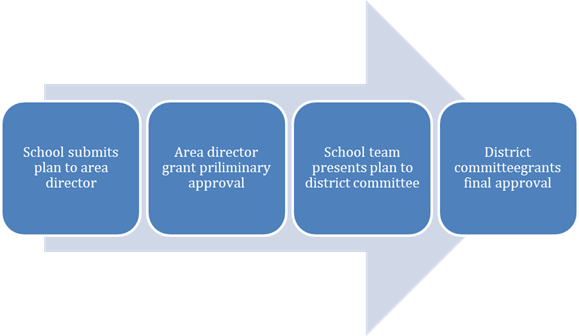
Step 1: Review school data that serves as the basis for request

  • Review current school-level data with your area director:
    • Academic performance
    • Behavior trends
    • Enrollment patterns
    • Staffing ratios
    • Facility needs
School Data PointWho to contact if you have questions about accuracy or need additional clarity
Academic PerformanceDr. Patrick Jefferies, Supervisor, Data & Assessment or Dr. Christine Marriott, Director of Title I and School Improvement
Behavior TrendsDr. Allison Martin, Director of SEL & Preventive Services
Enrollment PatternsSam Quartz, Chief Information Officer
Staffing RatiosLogan Hall, Executive Director, Human Resources or his designee
Facility NeedsIsaac Astill, Executive Director, Auxiliary Services

Step 2: Draft a resource petition

  • Complete the District Resource Petition, which includes:
    • Description of the requested resource(s)
    • Supporting data (quantitative and/or qualitative)
    • Expected impact on student outcomes
    • Explanation of alignment with school and district strategic goals

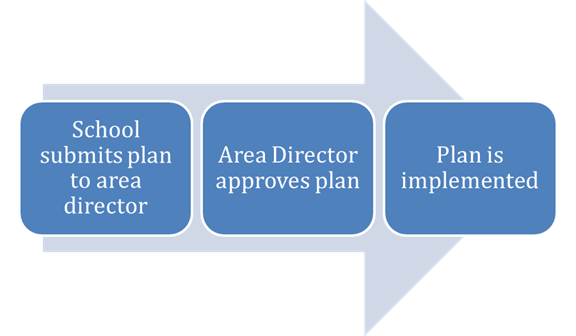
Step 3: Area Director review

  • Schedule a consultation to review your petition with your Area Director.
  • Revisions or recommendations may be made to strengthen alignment or clarify outcomes.
  • Once approved by the Area Director, it will proceed to the District Review Process,

District Review Process

Step 4: Cabinet-Level review

After the deadline, a cross-functional Cabinet committee will evaluate requests using the Weighted Resource Allocation Formula (see below) and determine feasibility and alignment with district-wide initiatives.

Step 5: Communication of decision

  • A formal written response will be provided in accordance with the annual timeline.
  • If approved, a deployment timeline and point-of-contact will be shared.
  • If declined, the rationale will be explained and next steps will be offered for support and/or resubmission.

Weighted Resource Allocation formula

To ensure fairness and transparency, each petition will be evaluated using the following scoring system (Total Possible: 100 points):

FactorWeightDescription
Student Enrollment and Demographics25 pointsProportion of high-need students (e.g., FRL, ELL, SPED)
Academic & Behavioral Data20 pointsEvidence of gaps in achievement, chronic absenteeism, or behavior challenges
Access Impact20 pointsDegree to which resource addresses disparities or underserved student groups
Alignment with Strategic Goals15 pointsHow well the request aligns with district/school improvement priorities
Stakeholder Engagement10 pointsInvolvement of parents, staff, and community in needs assessment and planning
Feasibility & Sustainability10 pointsPracticality of implementation and potential for sustained impact

Minimum threshold for consideration: 65 points

Implementation & Monitoring

Step 6:  Review & Feedback

Relevant staff will review resource allocation with building staff.

Step 6: Resource deployment

Work collaboratively with the assigned district departments (e.g., HR, Finance, Facilities, SPED) to implement the resource as planned.

Step 7: Evaluation & reporting

  • Monitor effectiveness using outcome data and feedback tools.
  • Submit a mid-year and end-of-year report summarizing impact.
  • Adjustments may be made as necessary for sustainability.

Ongoing support and improvement

  • School Leadership & Support will maintain a log of all approved petitions for transparency.
  • Annual reviews of the process will be conducted by Cabinet to assess equity and efficiency.
  • Principal feedback will directly inform system refinements.

Supporting Tools

Final Note

We thank you for your dedication to equity, excellence, and innovation. This process is not simply about resource distribution—it is about recognizing the unique stories of your schools and responding with meaningful support. Together, we will ensure every student in Salt Lake City School District receives the opportunities they deserve to learn, grow, and succeed.

For questions or additional support with your resource petition, please contact your Area Director or the Office of School Leadership & Support.

Scholarship for Teachers

Are you interested in teaching Concurrent Enrollment classes at your high school but are not qualified? Do you want to take the college classes so you are qualified? What if we pay for the tuition? 

Let's jump in!

We are excited to offer an opportunity to pay for your tuition to take a class (or two, not an entire Master's degree) to become qualified to teach concurrent enrollment. 

Apply Here!

If you don't know if you are qualified or want to have a conversation about offering additional concurrent enrollment classes, please reach out to your CTE Coordinator or the Business Development Coordinator: 

Julianna Wing, CTE Business Development Coordinator 

Anne Martin, CTE Coordinator, East High School 

Emily Grass, CTE Coordinator, Highland High School 

Sarah Wilson, CTE Coordinator, West High School 

Guidance for Implementing Arena Scheduling in High Schools

Effective: Second Semester 2025–2026 and Fall 2026

Dear High School Administrators,

As part of our ongoing commitment to equitable access, student voice, and efficient school operations, we are preparing to implement arena scheduling (class choice registration) for the second semester of the 2025–2026 school year and for Fall 2026.  This is the first of what we anticipate will be several communications outlining processes and systems for this process.

Arena scheduling allows students to actively participate in building their schedules by selecting classes during designated windows of time. Research has shown that student involvement in course selection increases ownership over learning, reduces schedule change requests later, and promotes higher levels of satisfaction with school (Morrison, 2018; Levin, 2020). Additionally, when implemented with fidelity, arena scheduling improves balance in class sizes and maximizes staffing efficiency.

To ensure smooth implementation, we will follow a common registration calendar across all high schools.

Arena Scheduling Calendar

Month(s)ActionResponsible Party
OctoberAll new course requests or course changes submitted by end of fall breakTeachers, Principals
November & DecemberCourse requestsCounselors, Students
January & FebruarySchools build schedulesSchool Administration
March & AprilLoad student requestsSchool Administration
MayStudents modify their schedules (no teachers listed)Counselors, Students
After July 15Final schedule loadIT Department

Implementation Notes & Rationale

  1. Promotes Student Agency
    • Students take greater ownership of their education when they have choice in course selection.
    • Involving students early supports better alignment between academic goals and personal interests.
  2. Reduces Scheduling Conflicts
    • By allowing schedule modifications in May, schools can address conflicts before the fall semester begins.
    • This reduces stress on both families and counselors at the start of the year.
  3. Supports Equity and Transparency
    • A consistent process across schools ensures fairness in how students access courses.
    • Clear timelines help families and staff plan ahead.
  4. Improves Operational Efficiency
    • Earlier submission of requests and course loads gives schools more time to finalize staffing and resource needs.
    • Fewer last-minute changes means smoother school openings.

Next Steps for Administrators

  • Communicate this calendar and process to counselors, teachers, and front office staff to ensure alignment.
  • Support staff in preparing students for the new process by hosting informational sessions or providing resources.
  • Encourage teachers and counselors to highlight the importance of thoughtful course selection with students.

Thank you for leading this important shift. By implementing arena scheduling together, we are creating a more student-centered and efficient system that benefits our learners, our staff, and our schools.

As we approach the 10-Day Drop window, please review the following guidance carefully. Our goal is to ensure consistency across schools while supporting students and families through clear communication and outreach.

Board Policy S-4 states:

“School administration and/or their designees will attempt at least one home visit before implementing a 10-day withdrawal. The home visit will be logged in PowerSchool.”

Recognizing the unique challenges at the start of the school year, outreach efforts such as phone calls, emails, and text messages may be documented as interventions in lieu of an immediate home visit. When feasible, a home visit should still be made, but it is not required prior to initiating the 10-Day Drop.

Please follow the updated procedures below:

1. General Education Students

  • Who: Students who registered for this school year but have not attended at all.
  • Action: Drop the student the day after 10 unexcused absences.
  • Drop Deadline: September 2
  • Exit Date to Enter: September 3
  • Requirements:
    • At least one documented intervention is required prior to dropping the student.
    • Acceptable interventions include: phone calls, text messages, emails, or home visits.
    • Document the outreach in PowerSchool.

2. Special Education Students

  • Who: Students with an IEP who have 30 consecutive unexcused absences.
  • Action: May be dropped after 30 consecutive unexcused absences.
  • Exit Date to Enter: Day after the 30th absence.
  • Requirements:
    • Special education teachers must document all attempts to connect with the family.
    • Email documentation to Erin.
    • Fill out the 10-day Ready and Willing Letter FORM document at 10 days of consecutive absences.
    • Complete the SCRAM link on the DDC.
    • Exit the student using code M.

3. Students Who Rolled Over from Last Year (Not Registered This Year)

  • Who: Students who appear on your roster but did not complete registration for the current school year.
  • Action: Drop at date of entry.
  • Exit Date to Enter: First day of school or the listed entry date.
  • Note: No intervention is required. However, please carefully verify that the student truly did not register or attend before proceeding.

Key Reminders

  • Equity and care are central. Our outreach efforts should reflect compassion and the intent to reconnect families to school.
  • Document everything. Whether by phone, text, email, or home visit, please ensure all interventions are logged in PowerSchool.
  • Seek support if unsure. When in doubt, reach out to your supervising director for clarification.

Together, these practices ensure we meet compliance requirements while also extending every opportunity for students to engage with school. Thank you for your continued commitment to students and families as we begin this school year.

Bri Conley

Director of Educational Equity and Access

Published 8/29/2025

· 1 min read

Dear Principals,

As part of SLCSD's Strategic Plan Pillar 3, Goal 1, we are beginning baseline data collection on student and family attendance at key school events:

  • Back-to-School Night
  • Two additional family engagement events this year(selected by your school)
  • Fall and Spring SEP Conferences

Please complete the School Event Attendance Count form by Thursday, September 4. The form includes:

  • Attendance counts or estimates for 2025 Back-to-School Night
  • Method of tracking attendance (e.g., sign-in sheets, digital check-ins, estimates)
  • Prompts to identify your next two 2025-26 major events and SEP dates
  • Input about last year's most attended events at your schools

Thank you for your timely attention and support.

Last year we piloted the Sherpa AI absence tracking tool with 11 schools, free of charge. The pilot generated strong interest across the district and many schools are eager to use the tool to support attendance efforts. 

However, because the cost of implementing Sherpa AI exceeds $50,000 we must go through a competitive Request for Proposal (RFP) process. This ensures transparency and gives qualified vendors the opportunity to submit bids for the services we are seeking such as timely and improved communication with families regarding student absences, robust data tracking, and more.

This RFP process typically takes about 10 weeks to complete. During this time, please continue your efforts to connect with families of absent students. If you need support, I would be happy to join you and your attendance team in a meeting to generate ideas to continue to improve attendance efforts at your sites. 

In the coming days, I’ll also be showing you how to access your attendance data on PowerSchool Analytics and Insights. This will allow you and your attendance team to begin identifying students who are chronically absent and to start developing targeted interventions. We’ll also begin thinking about systems and supports that can be put in place to better serve the student groups most impacted by chronic absenteeism.

As always, if you have any questions, please reach out any time.

Summary:

During the annual Administrator Institute in July 2025, all administrators received an update on legislative changes, including new requirements related to toilet training.

The updated guidance is:

  • Schools must provide educational services to any student removed from school because of toilet training while they are at home.
  • Students may return to school for their Special Education minutes during the time they are working on toilet training at home.

During the elementary session, administrators asked the following questions. Responses are summarized below:

  • What if a student has a documented medical issue on a 504 plan, or toilet training concerns are part of an IEP?
    The student would not be removed from school. Appropriate accommodations would be made.
  • Can students have a goal on their IEP for toilet training?
    Toilet training goals can be written into an IEP if the toileting issue is directly related to the student’s disability and is necessary for their access to education (often as a functional or transition goal).
  • Can a student qualify for an IEP if they are not toilet trained?
    No. Toilet training by itself is not a disability. A student cannot have an IEP with a goal that is only toilet training.

If toileting concerns are developmental (a child is simply late in training) but not tied to a qualifying disability or medical condition, then it would not meet the threshold for IEP elibility.

In these cases, general education strategies and family support would be the avenue, not a formal plan.

Rationale:

H.B. 233 — School Curriculum Amendments prohibits local education agencies (i.e., public schools) from using or allowing health-related instruction or materials provided by entities that perform elective abortions. That includes materials created, funded, or donated by those providers, as well as any instruction delivered by their employees or volunteers.

SLCSD had approved several presentations from providers that are no longer permissible. The new Health curriculum will help support teachers in designing their instruction in Health I and Health II.

Expectations for Implementation: 

  1. Communication: 
  • Please make sure appropriate teachers and staff are aware.
  1. Collaboration: 
  • Contact Erin Anderson with questions.

Keywords:  Toilet training 

Principals,

Each year you should designate one member of your faculty to act as your school's Positive Behavior Specialist. This person will oversee your school's Positive Behavior Plan to address the causes of student use of tobacco, alcohol, electronic cigarette products, and other controlled substances as required by Utah law. This person should be a school counselor or teacher-leader as they qualify for a stipend to compensate them for this work. 

Please submit the name of your school's PBS to Alli Martin (allison.martin@slcschools.org) by August 22, 2025.

Thank you,

Alli

Alli Martin, Ed.D. (she/her/hers)

Director of Social-Emotional Learning (SEL) and Prevention Services

Salt Lake City School District

Office: 801.578-8137 

www.slcschools.org 

Follow the district: Facebook | Instagram | Twitter  

Excellence and Equity: every student, every classroom, every day

As shared during Admin Institute, our district is joining the Utah State Board of Education’s (USBE) attendance initiative, Every Day Counts, for the 2025–2026 school year. This initiative directly supports our District Board Goal to reduce chronic absenteeism from 28% to 10% by 2029.

To support this important work, USBE has provided a variety of resources through their Absenteeism and Truancy Prevention page, including:

  • Flyers to display throughout your schools
  • Attendance Handouts for Parents
  • Monthly social media templates and themes to promote attendance on your school's platforms

USBE is actively working to translate these materials to ensure accessibility for all families. If the Attendance Handout for Parents is not available in translated form by mid-next week, we will collaborate with our Communications Department to ensure it is translated and ready for distribution.

Our Communications Department will also continue developing additional tools throughout the year to reinforce this message.

Back to School Night is a great opportunity to introduce the challenge to families. Please emphasize that improving student attendance is a district priority, and we are committed to supporting families in every way possible. Families in need of support can reach out to their school counselors, who are ready to assist with accessing resources and meeting basic needs.

Please also encourage your teachers to join us in promoting the Every Day Counts message. It’s just 180 days and we’re making each one count.

Let’s ensure families know it takes a village to improve attendance, and we can’t do it without them. Their partnership is essential to helping every student succeed.

As we look ahead, please keep in mind that September is Attendance Awareness Month. We’ll be resharing ideas and strategies to help promote it and build momentum. Since our goal is to bring awareness every month, this is a great time to start thinking about how your school can participate.

We are equally committed to supporting you in this work. If you have any questions about the attendance challenge or need support with anything related to attendance, please don’t hesitate to reach out. I’m available and happy to assist in any way I can.

I’m excited for what we will accomplish together this year!

In solidarity,

Bri Conley, Ed.D. 

Director, Educational Equity and Access

Salt Lake City School District

Office: 801-578-8281

slcschools.org

Follow the district: Facebook | Instagram | Twitter   

Excellence and Equity: every student, every classroom, every day

Dear High School Team,

Thank you for your continued leadership and commitment to creating positive, safe, and inclusive school environments. As we begin the new school year, I would like to reaffirm and formally document our shared expectations related to Positive Behavioral Interventions and Supports (PBIS) implementation across our high schools.

These expectations have been reviewed and communicated previously through written correspondence and in multiple meetings. The following practices are essential components of our districtwide efforts to build a consistent and supportive culture across all secondary campuses:

  1. Hall Pass Protocols: Teachers will keep hall passes behind their desks so they are not immediately accessible to students.
  2. Classroom Dismissal: Teachers will not dismiss students early from class.
  3. Visual Expectations: Schools will hang visual behavior expectations in common areas to reinforce positive norms and support clarity for all students.
  4. Active Supervision: Teachers will be present in hallways during passing periods to promote school safety, foster positive interactions, and support a welcoming school climate. 

In addition, a small team comprised of school and district administrators will begin conducting PBIS walk-through observations to gather implementation data. These visits are intended to provide formative feedback and highlight areas of strength and opportunity. The observation tool is currently being finalized and will be shared with you in advance of any scheduled walk-throughs. Our collective goal is to ensure that expectations are being applied consistently and effectively, aligned with our district’s commitment to equity, inclusion, and student well-being.

Thank you once again for modeling the leadership and professionalism that make Salt Lake City School District a great place for students to learn and thrive. Should you have any questions or need support, please don’t hesitate to reach out.

x  Powerful Protection for WordPress, from Shield Security
This Site Is Protected By
Shield Security