From: Dr. Garret Rose, Advanced Academics Supervisor
Subject: Annual Testing Dates and Expectations
Background
SLCSD’s Magnet and Advanced Academics and Mentoring Program (AAMP) provide advanced learning opportunities for students who demonstrate gifted characteristics and high academic potential.
The Magnet program offers full-day advanced instruction for eligible students in grades 1–6. Students learn with academic peers through grade-level and accelerated instruction that emphasizes depth, complexity, creativity, and critical thinking. Magnet opportunities continue in middle school through advanced core classes.
AAMP is a part-time, school-based program for eligible students in grades 4–6. Students receive up to three hours of advanced instruction each week while remaining in their neighborhood school. AAMP helps students strengthen critical-thinking skills, develop their academic identity, and prepare for continued advanced learning opportunities.
Students qualify for these programs through an identification process that includes the Cognitive Abilities Test (CogAT), a group-administered aptitude assessment used by schools to measure reasoning and problem-solving skills.
Summary Fall Testing: Beginning August 24 through September 4, AAMP teachers and staff are testing any new students in grades 1-2 and 4-6 as well as students in those grades that may not have been tested previously with the CogAt assessment. Assessments in grades 1 & 2 should take approximately 1 hour; grades 4-6 require two 90-minute sessions (about 180 minutes in total). AAMP teachers will work with classroom teachers to schedule these assessments, being mindful of WIDA screening and Acadience testing happening in the same window.
January Testing: January 6 through January 19, AAMP teachers and staff will be testing Kindergarten and grade 3 students. This screening is used to identify students who qualify for magnet classes or for AAMP programs. A comprehensive schedule will be sent out to all elementary principals with the testing dates and times at each school later in the fall. Kindergarten testing will take approximately one hour and grade 3 testing will take three hours in two sessions.
This is an exhaustive and massive undertaking, so we kindly ask the following:
Prioritze computer lab time for testing as outlined on the schedule.
Work with your compter tech to ensure computers are updated in the labs.
If no computer labs are available, ensure student laptops are updated and bandwidth is available.
Understand our need for flexibility for unexpected intangibles (lagging Wi-Fi, power outages, absent students, etc.).
Communicate to staff:
The dates (January 6-19) and expectations for student testing; and
Post the schedule for labs when it is sent out so teachers are aware.
Expectations for Implementation
Communication
Principals are responsible to ensure the steps above are implemented
Thank you for helping us provide opportunities for our students!
For any further clarifications, please contact any of the following:
Subject: Ordering Materials for Classrooms from USBE
Background
Botvin LifeSkills Training (LST) is an evidence-based substance-use and violence-prevention program that helps students develop skills for making healthy and responsible choices. Lessons address decision-making, communication, managing stress, resisting peer and media pressure, building positive relationships, and understanding the risks of alcohol, tobacco, electronic cigarettes, and other drugs. SLCSD uses the elementary program with fifth-grade students as part of its health and prevention instruction.
Utah Code §53G-10-406requires public schools to offer the state’s Underage Drinking and Substance Abuse Prevention Program to students in grade 4 or 5, grade 7 or 8, and grade 9 or 10. Utah Administrative Rule R277-910establishes the criteria for selecting the program and requires it to be evidence-based, taught over multiple lessons, include opportunities to practice skills, and align with Utah’s academic standards. The Utah State Board of Education currently identifies Botvin LifeSkills Training as the state’s approved provider for this required program.
In SLCSD, we incorporate the Botvin training in grade 5, Health I, and Health II. In secondary, the materials are incorporated into our health textbooks and do not need to be ordered.
Elementary teachers or counselors using the program must complete a state-created training. At this time, they only need to complete it once. A $210 stipend is available for educators who complete the training outside of contract hours. THIS STIPEND IS FROM USBE, and directions will be provided during the course registration process. Participants will also receive relicensure points in the state system (Altitude). If you have questions about who has already completed this training, please contact Katie Lowery.
Ordering Materials
To order materials for your students in grade 5, you must:
Determine if you have any materials left over from last year, and how many.
Materials will be delivered to your school 3-4 weeks after September 11.
Expectations for Implementation
Communication
Principals are responsible for coordinating with their teachers and head secretary to complete and submit the order forms for needed materials. We will send in one order for all schools.
Principals are responsible for checking with their teachers to ensure they have completed the one-time Botvin LifeSkills training. If you have questions about your teachers, contact Katie Lowery.
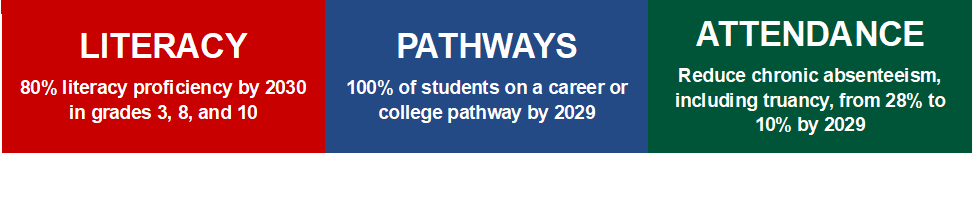
Student Services supports our district priorities of Literacy, Attendance, and CCR Pathways by removing barriers to learning, increasing student engagement and school attendance, and supporting students’ academic, social-emotional, health, safety, and college and career needs. Through the collaborative work of counselors, social workers, McKinney-Vento staff, nurses, and school resource officers, we help ensure students are present, supported, ready to learn, and prepared for their future.
THIS MONTH'S ACTION ITEMS & UPDATES
Please coordinate with counselors for mandatory student G19-20 Anti-Bullying and Anti-Harassment student training. Documentation is due by October 1, 2026.Please submit all documentation via this link.
Please coordinate with the social workers to schedule the annual mental health staff presentation and to schedulestudent mental health screenings
This year, ourMcKinney-Vento teamis working with fewer staff, requiring ongoing support and collaboration at schools with counselors and administrators to identify and support students experiencing homelessness. Please reach out if you would like to request staff training.
CPR/AED/Narcan training Is offered one Friday a month at the district office building. If you would like to be certified or your certification has expired, please sign up. Remember, schools must have at least three front office staff members CPR certified to have an AED in the school.Nurses are currently:Creating and updating student healthcare plans.Providing Annual School Health training, including Stop the Bleed, to all faculty and staff.Assisting school secretaries to review student immunization recordsHelpful Links:How to access Healthcare Plans Sick Room Protocol Guidelines for IllnessHealth Services School Assignments and Resources
McKinney-Vento
This year, our McKinney-Vento team is working with fewer staff, making continued collaboration with counselors, administrators and teachers especially important in supporting students experiencing homelessness.McKinney-Vento Team:Mike Harman | 801-243-8351 (work cell) | Mike.Harman@slcschools.org Becky Baskett | 385-518-4818 (work cell) | Becky.Baskett@slcschools.orgMcKinney Vento Updates TrainingSee McKinney-Vento List in PowerSchool: homeless_code>0 - If students you know qualify and are not on the list, complete the Housing QuestionnaireOther Reminders:Housing Questionnaire: This form activates support for qualifying students. Email completed forms to Becky Baskett and Mike Harman (See District Documents Center for translated forms) Rental Assistance:Utah Community Action 801-359-2444 Immediate Shelter:Connie Crosby Family Resource Center CCFRC (formerly the Midvale Family Shelter) Encourage families to call first: 801-569-1201 Reach out to the McKinney-Vento team for student support, questions and/or staff training Helpful Links: McKinney Vento Resources
School Resource Officers
If you need an SRO for any reason: Call your school assigned SRO (if no response) Call Sgt. Jonathan Lampshire 801-783-9337 (if no response) Call dispatch for non-emergency 801-799-3000 Call 911 in an emergency Promising Youth & Promising Youth Referral Contact Krystyn Stargel 385-312-3104 regarding referrals or questions. Peer Court Referral Contact Sadie Gomez 801-322-1815 regarding referrals or questions. Helpful Links:SRO School Assignments School Resource Officers
Title: Action Item: Assigning STEM AC Math Digital Learning Student Licenses
Date: 08/28/2026
To: All School Administrators
From: Holley McIntosh, STEM Director
Dr. Tiffany Hall, Executive Director of Teaching & Learning
Subject: Assigning STEM Action Center (STEM AC) Math Digital Learning Student Licenses
Summary:
The math digital learning student licenses awarded to schools from the STEM AC Math Digital Learning Grant will be assigned by SLCSD IT Department.
Administrators must submit a SLCSD IT helpdesk ticket to inform IT how the licenses are to be assigned in their school.
Rationale:
The STEM AC did not have sufficient resources to fund any school’s full grant request for licenses. As only a portion of the licenses you requested were provided, schools need to be strategic in assigning licenses to classes or students that will best use them. The STEM AC tracks student usage to ensure license are being used at appropriate levels.
Schools not using their licenses by October 30, 2026 run the risk of having the STEM AC reassign their licenses to another school in the state.
Expectations for Implementation:
Communication
Administrators are responsible to tell teachers in their building which grade levels and specific teachers have access to these programs.
Administrators are responsible to submit a helpdesk ticket to the SLCSD IT Department. Note in the ticket*:
the name of the math digital learning supplemental program you received from the STEM AC grant
which grade levels or specific teachers are to have licenses
how many licenses for the grade levels or specific teachers
One exception: High school ALEKs licenses will be managed and assigned by your HS Math Coach/Content Area Specialist.
Collaboration:
Contact Holley McIntosh if you have questions about your school’s STEM AC grant award.
Work with the District Math Coach/CAS assigned to your school if you have questions about how to match these licenses with student needs.
Evaluation
Administrators communicate the appropriate assignment of the awarded licenses to IT.
Administrators ensure the licenses are used appropriately and as a supplement to our adopted core programs.
See the conditions of the STEM AC grant for more information.
Keywords: STEM Action Center, STEM AC, math, digital learning licenses, math student licenses
*Helpdesk Directions: First Button > Category: Applications > Subcategory: Your selected program > Subject: Assign Licenses
Announcements SLCSD Priorities 2026-27 - Our top priorities highlighted from our strategic plan for student success. (Draft only!!) Common Expectations – Administrative guiding document for 26-27 school year. September Cultural Calendar – Record of cultural observances for September CSTAG (comprehensive school threat assessment guidelines) is a critical component of school safety. All building administrators must be trained in CSTAG but it is recommended that others be trained as well. If you or your staff are interested in completing CSTAG training, please sign up for our next session offered on Monday, Sept. 14 from 8:30am-4:00pm in room 1055 at the District Office. Registration is available on Kickup or reach out to Dr. Alli Martin with any questions. CELEBRATIONS –Please send toleeson.taylor@slcschools.orgorangelina.tovar@slcschools.orgby Wednesday at 5:00 PM. Attendance and Engagement Meta Network celebration Salt Lake City School District has been accepted into the National Attendance and Engagement Meta Network, a Gates Foundation-funded initiative focused on improving student attendance and engagement. East, West, and Horizonte will represent the district in this national learning network, collaborating with schools and districts across the country to identify, implement, and refine strategies that reduce chronic absenteeism and strengthen student connection to school. We appreciate the leadership of the East, West, and Horizonte teams for taking on this work and look forward to sharing lessons learned across the district throughout the year. ALL ADMINISTRATORS – Items for all building level administrators DEADLINES PUBLISHED 2026 Principal Tackle List.docx ACTION ITEMS 26-27 Title IX Trainings – Required trainings for Title IX and updating your school's Deputy Title IX Coordinator information. 26-27 Start of School Title I Updates – To support a successful beginning to the 2026–2027 school year, we are asking the principals of Title I schools to please complete the following required Title I tasks by Friday, August 28, 2026. Completing these items early will help ensure your school is well prepared for the year ahead. If you need assistance at any point, please do not hesitate to reach out to Dr. Taylor. Administrator ESL Endorsement Information – In the Salt Lake City School District, every educator plays an important role in supporting English learners. As an administrator, you can choose to complete the full ESL endorsement, or just complete three classes for the modified endorsement.
INFORMATION ITEMS Attendance Update August 2026.docx -this is the first attendance newsletter for the 26-27 school year. Attendance-Based Grading Under HB 502 Guidance – The Salt Lake City School District is providing the following guidance regarding attendance-based grading under HB 502. This guidance is intended to support a fair, transparent, and consistent approach across our secondary schools while ensuring that students and families clearly understand how attendance may affect a course grade. Enrollment Guidance Related to SB 167 – We recognize that schools have received a number of questions regarding student enrollment requirements and the implementation of SB 167. We appreciate your continued attention to this matter and your efforts to ensure that enrollment decisions are handled consistently and appropriately across the district. Edia Implementation and Attendance Communication – See important information regarding our implementation of Edia attendance software. Assessment Plan for SY 2026-27 – This document is the comprehensive overview of assessments. For specific dates of testing windows, questions about administration, or training on administration, please contact Dr. Patrick Jefferies, Assessment & Evaluation Supervisor. Transportation Contact Information -- As we prepare for the upcoming school year, we would like to share the Salt Lake City School District Transportation Department contact information to help ensure you can quickly connect with the appropriate staff for transportation-related needs. UPDATE: UTA Passes for the 26-27 School Year – UTA is upgrading its fare payment system, which requires new transit cards for staff, guardians, and most students. Standard Operating Procedures for Zūm Pass Usage, Student Boarding, and Space-Available (Transportation) – The Salt Lake City School District is implementing consistent procedures for Zūm pass usage, student boarding, transportation eligibility, and space-available transportation requests for the 2026–27 school year. Botvin Life Skills Training – It is now time to fill out the BOTVIN forms for your schools. USBE Updates School LAND Trust – USBE is excited to announce a new Canvas course designed to support District Principals in administering the School LAND Trust (SLT) program. District principals are vital to ensuring School Community Councils (SCC) are properly formed and funds are used to address critical academic needs. SEOP Newsletter – August newsletter USBE August Attendance Newsletter – USBE Attendance information for the month of August.
HIGH SCHOOLS – Items for high school administration DEADLINES ACTION ITEMS Calculating Added Value GPA -- Additional value is awarded to courses that demonstrate a higher level of academic rigor. This system ensures students are recognized for the commitment they make when enrolling in advanced coursework. INFORMATION ITEMS Monthly Registrar Meetings -- Mandatory monthly meetings for high school registrars are essential to ensure consistency, efficiency, and compliance across the school district. These meetings serve several critical functions: MIDDLE SCHOOLS –Items for middle school administration DEADLINES ACTION ITEMS INFORMATION ITEMS ELEMENTARY SCHOOLS – Items for elementary school administration DEADLINES ACTION ITEMS INFORMATION ITEMS Math Acadience Order process for 2026-27: Any school can use manual licenses for K-3 Math Acadience paid for by USBE. Schools can pay $2.95/student with school funds to upgrade to digital licenses and avoid hand entry of data in K-1. For more details, please click here. To order licenses for grades 4-6, email quotes@acadiencelearning.org to purchase. TRAINING: Starting now, participants can self-enroll in the Canvas course for the SY26-27 administration and scoring of the Acadience Math assessments. Once they complete the module(s) and submit the survey they will receive a certificate of completion. Self-enroll URL link https://usbe.instructure.com/enroll/C6FRBW Please reach out to Dr. Patrick Jefferies, Assessment & Evaluation, with questions. patrick.jefferies@slcschools.org RESOURCES AVAILABLE FOR SCHOOLS FROM DISTRICT DEPARTMENTS SPED Scoop – Special Education Newsletter Student Services Resources Teaching & Learning Salt Lake City Education Foundation School Leadership & Support Administrative Memos
*Unless otherwise requested, information will run for 2 weeks only.
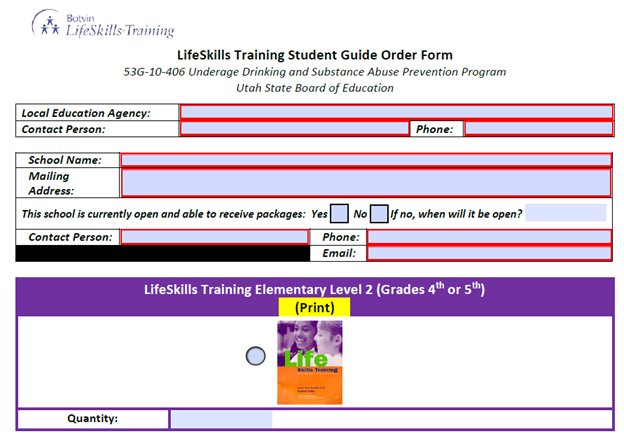
It is now time to fill out the BOTVIN forms for your schools. Below is a picture of that application, and what should be put into the appropriate boxes. If you are new to this process, Botvin LifeSkills Training is the only approved program that meets the requirements outlined in UCA § 53G-10-406 and R277-910. The program must be offered to all students in grades 4 or 5, 7 or 8, and 9 or 10 (UCA § 53G-10-406). In Salt Lake City School District, we begin our program in 5th grade.
All 5th grade teachers must receive the BOTVIN training. If a teacher is new to the district, or has been teaching in another grade, please make sure they get notified to take the training through Clarissa Stebbing. Required Teacher Training -New Simplified Registration Process
For schools filling out the form, below is a sample of what you should put in the boxes. If you have questions, please reach out to Katie Lowery or Clarissa Stebbing.
Please have your school secretaries send the form to AMY BURRIS and we will send in the numbers for our district. Ordering Student Guidebooks
See the highlighted links below for TEACHER MANUALS AND RESOURCES
From: Dr. Tiffany Hall, Executive Director Teaching & Learning
Subject: ESL Endorsements
Summary:
In the Salt Lake City School District, every educator plays an important role in supporting English learners. As an administrator, you can choose to complete the full ESL endorsement, or just complete three classes for the modified endorsement.
Endorsement Options
A state ESL endorsement, recognized by the Utah State Board of Education (USBE); or
A district-modified ESL endorsement, recognized within SLCSD:
Understanding Language Acquisition and Cognition
Foundations of Cultural Diversity
Family and Community Engagement in ESL Education
The state ESL endorsement may be earned by:
Completing five graduate-level courses with a grade of C or better; or
Passing the Teaching English to Speakers of Other Languages Praxis Exam (5362); and
Submitting your application to the USBE to place the endorsement on your license.
Rationale:
This is a district requirement outlined in your employment contract.
Expectations for Implementation:
Communication
The next cohort will begin in April 2027, and registration information will be emailed to all educators in February 2027.
For additional information, including district-modified endorsement requirements, please visit the SLCSD ESL Endorsement webpage.
Announcements SLCSD Priorities 2026-27 - Our top priorities highlighted from our strategic plan for student success. (Draft only!!) Common Expectations – Administrative guiding document for 26-27 school year. Leadership Academy – Moving from the classroom or coaching role into school administration is a major shift. The Assistant Principal Leadership Academy is built to help our 1st and 2nd year assistant principals successfully navigate that transition and grow their leadership capacity. This program gives you direct, hands-on experience with the actual district systems and operational practices that keep a building running smoothly. Over the course of the year, we will dig deep into student services, special education compliance, master scheduling, and CELEBRATIONS – Please send to leeson.taylor@slcschools.org or angelina.tovar@slcschools.org by Wednesday at 5:00 PM. Attendance and Engagement Meta Network celebration Salt Lake City School District has been accepted into the National Attendance and Engagement Meta Network, a Gates Foundation-funded initiative focused on improving student attendance and engagement. East, West, and Horizonte will represent the district in this national learning network, collaborating with schools and districts across the country to identify, implement, and refine strategies that reduce chronic absenteeism and strengthen student connection to school. We appreciate the leadership of the East, West, and Horizonte teams for taking on this work and look forward to sharing lessons learned across the district throughout the year. ALL ADMINISTRATORS – Items for all building level administrators DEADLINES PUBLISHED 2026 Principal Tackle List.docx ACTION ITEMS 26-27 Title IX Trainings – Required trainings for Title IX and updating your school's Deputy Title IX Coordinator information. 26-27 Start of School Title I Updates – To support a successful beginning to the 2026–2027 school year, we are asking the principals of Title I schools to please complete the following required Title I tasks by Friday, August 28, 2026. Completing these items early will help ensure your school is well prepared for the year ahead. If you need assistance at any point, please do not hesitate to reach out to Dr. Taylor. INFORMATION ITEMS Attendance Update August 2026.docx -this is the first attendance newsletter for the 26-27 school year. Attendance-Based Grading Under HB 502 Guidance – The Salt Lake City School District is providing the following guidance regarding attendance-based grading under HB 502. This guidance is intended to support a fair, transparent, and consistent approach across our secondary schools while ensuring that students and families clearly understand how attendance may affect a course grade. Enrollment Guidance Related to SB 167 – We recognize that schools have received a number of questions regarding student enrollment requirements and the implementation of SB 167. We appreciate your continued attention to this matter and your efforts to ensure that enrollment decisions are handled consistently and appropriately across the district. Edia Implementation and Attendance Communication – See important information regarding our implementation of Edia attendance software. Assessment Plan for SY 2026-27 – This document is the comprehensive overview of assessments. For specific dates of testing windows, questions about administration, or training on administration, please contact Dr. Patrick Jefferies, Assessment & Evaluation Supervisor. Transportation Contact Information -- As we prepare for the upcoming school year, we would like to share the Salt Lake City School District Transportation Department contact information to help ensure you can quickly connect with the appropriate staff for transportation-related needs. Standard Operating Procedures for Zūm Pass Usage, Student Boarding, and Space-Available (Transportation) – The Salt Lake City School District is implementing consistent procedures for Zūm pass usage, student boarding, transportation eligibility, and space-available transportation requests for the 2026–27 school year. USBE Updates School LAND Trust – USBE is excited to announce a new Canvas course designed to support District Principals in administering the School LAND Trust (SLT) program. District principals are vital to ensuring School Community Councils (SCC) are properly formed and funds are used to address critical academic needs. SEOP Newsletter – August newsletter USBE August Attendance Newsletter – USBE Attendance information for the month of August.
HIGH SCHOOLS – Items for high school administration DEADLINES ACTION ITEMS Calculating Added Value GPA -- Additional value is awarded to courses that demonstrate a higher level of academic rigor. This system ensures students are recognized for the commitment they make when enrolling in advanced coursework. INFORMATION ITEMS Monthly Registrar Meetings -- Mandatory monthly meetings for high school registrars are essential to ensure consistency, efficiency, and compliance across the school district. These meetings serve several critical functions: MIDDLE SCHOOLS –Items for middle school administration DEADLINES ACTION ITEMS INFORMATION ITEMS ELEMENTARY SCHOOLS – Items for elementary school administration DEADLINES ACTION ITEMS INFORMATION ITEMS Math Acadience Order process for 2026-27: Any school can use manual licenses for K-3 Math Acadience paid for by USBE. Schools can pay $2.95/student with school funds to upgrade to digital licenses and avoid hand entry of data in K-1. For more details, please click here. To order licenses for grades 4-6, email quotes@acadiencelearning.org to purchase. TRAINING: Starting now, participants can self-enroll in the Canvas course for the SY26-27 administration and scoring of the Acadience Math assessments. Once they complete the module(s) and submit the survey they will receive a certificate of completion. Self-enroll URL link https://usbe.instructure.com/enroll/C6FRBW Please reach out to Dr. Patrick Jefferies, Assessment & Evaluation, with questions. patrick.jefferies@slcschools.org RESOURCES AVAILABLE FOR SCHOOLS FROM DISTRICT DEPARTMENTS SPED Scoop – Special Education Newsletter Student Services Resources Teaching & Learning Salt Lake City Education Foundation School Leadership & Support Administrative Memos
*Unless otherwise requested, information will run for 2 weeks only.
To: Principals, School Administrators, Teachers, and Transportation From: Ken Martinez, Transportation Director, Isaac Astill, Executive Director, Auxiliary Service
Date: August 13, 2026 Subject: Standard Operating Procedures for Zūm Pass Usage, Student Boarding, and Space-Available (Transportation)
Purpose
The Salt Lake City School District is implementing consistent procedures for Zūm pass usage, student boarding, transportation eligibility, and space-available transportation requests for the 2026–27 school year.
The purpose of these procedures is to strengthen student safety, improve communication with families, provide accurate ridership information, and support effective transportation planning. At the same time, our primary responsibility is to ensure that students are transported safely to and from school.
The 2026–27 school year will begin with a soft implementation of Zūm pass usage. Students are expected and strongly encouraged to use their Zūm passes; however, students will not be denied transportation or left at a bus stop solely because they do not have, cannot locate, or are unable to use their Zūm pass.
These procedures apply to District-operated transportation routes and are intended to provide a clear and consistent approach for school administrators, staff, drivers, students, and families.
I. Zūm Pass Usage and Student Boarding
A. Encouraging Zūm Pass Use
Students who have been issued a Zūm pass should be encouraged to tap their pass when boarding and exiting the bus on every trip.
Consistent pass usage provides valuable information that supports:
Parent and guardian notifications;
Accurate student ridership information;
Transportation route planning;
Capacity planning; and
Accurate transportation records.
Schools should reinforce the importance of Zūm pass usage with students and families while emphasizing that the pass is intended to support transportation operations and student safety—not to create a barrier to transportation.
B. Students Without a Pass or With a Nonfunctioning Pass
If a student does not have a Zūm pass or is unable to use the pass:
The driver should politely remind the student to bring and use the pass on future trips.
The student should be allowed to board.
The driver should not delay the route or create a confrontation regarding a missing, lost, or nonfunctioning pass.
Repeated concerns should be reported to the Transportation supervisor.
Lost, damaged, or nonfunctioning passes should be addressed through the established replacement process. Students should continue to receive transportation while a replacement is being obtained.
II. Unknown or Potentially Ineligible Riders
There may be circumstances in which a student does not appear on the driver's current rider list, a Zūm pass does not register, or there is a question about whether the student qualifies for transportation.
In these circumstances:
The student should be allowed to board for that trip.
Drivers should not attempt to resolve transportation eligibility questions with students at the bus stop.
When necessary, the driver should record sufficient information to identify the student, including the student's name, school, route, and boarding location.
Eligibility concerns or repeated occurrences should be reported to the Transportation supervisor.
Transportation administration will review the student's eligibility and determine whether additional follow-up is necessary.
If a student appears to be repeatedly using transportation services for which they are not eligible, Transportation will work with school administration so that the concern can be addressed with the student and parent/guardian outside of the bus environment.
III. No Turn-Away Expectations
Drivers should make every reasonable effort to ensure that students are safely transported to and from school.
A student should not be denied boarding solely because:
The student forgot or lost their Zūm pass;
The student's pass does not scan;
The student does not currently appear on the driver's rider list; or
There is an unresolved question regarding transportation eligibility.
Eligibility questions, repeated misuse, and pass-compliance concerns should be addressed through the Transportation administrative process rather than by the driver at the bus stop.
If there is a safety concern or circumstance that prevents the bus from being operated safely, the driver should immediately communicate with Dispatch or a Transportation supervisor.
IV. Communication with Students and Families
Interactions with students should remain calm, respectful, and focused on safety.
Drivers and school staff should communicate that consistent Zūm pass use:
Provides important information and notifications to parents and guardians;
Helps the District understand actual ridership;
Assists Transportation with route planning and determining available capacity; and
Improves the accuracy of student transportation information.
The goal is to remove barriers to transportation while encouraging compliance.
School administrators should reinforce this message with students, families, and staff.
V. Transportation Eligibility and Space-Available Requests
The District recognizes that some students may request transportation even though they do not otherwise qualify under applicable transportation eligibility or distance requirements.
The District's space-available process is intended to provide a consistent method for considering these requests while ensuring that qualified students remain the priority and that actual route capacity is understood before space-available transportation is approved.
A. Qualified and Nonqualified Students
Qualified students are students who meet applicable state and District transportation eligibility requirements, including applicable distance requirements or District-approved safety-related exceptions.
Nonqualified students are students who do not meet the normal eligibility requirements but may request transportation when space is available on an existing route.
Qualified students will always receive priority when determining route assignments and available capacity.
VI. Beginning-of-Year Ridership Evaluation Period
For approximately the first four weeks of the 2026–27 school year, Transportation will evaluate actual student ridership on each route.
During this evaluation period:
Students will be strongly encouraged to consistently use their Zūm passes.
Transportation will use available ridership information, driver observations, and route data to establish actual route utilization.
Space-available and exception requests will generally not be approved until the evaluation period is completed.
Transportation will use this information to determine which routes have available capacity after qualified students have been accommodated.
This approximately four-week evaluation period replaces the previous practice of making determinations after approximately 15 school days.
VII. Students Riding During the Interim Period
During the beginning-of-year evaluation period, drivers should not independently remove, deny, or refuse transportation to a student because there is a question regarding eligibility.
If a potentially nonqualified student is already using a route:
The driver should continue transporting the student unless directed otherwise by Transportation administration.
Repeated or questionable use should be reported to the driver's supervisor.
Transportation will review the circumstances and coordinate with school administration when follow-up with the student or parent/guardian is necessary.
The intent is to resolve eligibility concerns administratively rather than leaving a student at a bus stop.
VIII. Space-Available Request Process
Following the approximately four-week ridership evaluation period, a parent or guardian may submit a Transportation Exception or Space-Available Request to the Transportation Department.
Transportation will consider:
Actual ridership on the requested route;
Bus seating and safe operating capacity;
Qualified students assigned to the route;
Historical and current ridership trends;
Route and stop locations;
Operational feasibility; and
Whether accommodation would require an additional route, vehicle, stop, or significant cost.
Space-available transportation may be approved when sufficient capacity exists after qualified riders have been accommodated.
IX. Approval and Denial of Space-Available Transportation
A. Approval
Space-available transportation may be approved when sufficient capacity exists and the request can be accommodated without negatively affecting qualified students or District operations.
Families should understand that:
Approval is based on available capacity.
Approval does not establish permanent transportation eligibility. It will be considered on a yearly basis.
The accommodation may be modified or discontinued if qualified ridership increases or operational needs change.
B. Denial
A request may be denied when:
Available capacity is insufficient;
The accommodation would negatively affect qualified riders;
An additional route, vehicle, stop, or significant operational expense would be required; or
Other operational or safety considerations prevent the accommodation.
Parents and guardians will be informed of the determination.
X. Ongoing Ridership and Eligibility Concerns
When Transportation identifies a student who appears to be repeatedly using services for which they are not authorized, the following process should be followed:
Driver: Report the concern to the Transportation supervisor.
Transportation: Verify the student's eligibility and circumstances.
Transportation: When appropriate, contact school administration.
School administration: Work with the student and parent/guardian to resolve the concern outside of the bus environment.
Drivers should not be placed in the position of confronting students about ongoing eligibility or removing students from transportation services without administrative direction.
XI. School Administrator Responsibilities
Principals and school administrators are asked to support consistent implementation by:
Communicating the expectations for Zūm pass usage to students and families;
Reinforcing that students should not be stranded because of a missing, lost, or nonfunctioning pass;
Directing transportation eligibility questions to Transportation rather than attempting to resolve them at the bus stop;
Supporting Transportation when repeated eligibility or ridership concerns require school-based follow-up;
Communicating with families in a calm, respectful, and solution-oriented manner; and
Helping students understand that Zūm pass usage supports safe and effective transportation planning.
School administrators should work collaboratively with Transportation when concerns arise and avoid placing drivers in the position of making eligibility determinations.
XII. Records and Communication
Transportation will maintain appropriate records related to:
Exception and space-available requests;
Approvals and denials;
Route capacity considerations; and
Significant or repeated eligibility concerns.
Schools and drivers will receive updated information as necessary when ridership assignments or transportation circumstances change.
XIII. Key Operating Principles
The following principles should guide implementation throughout the school year:
Student safety comes first.
Students should not be stranded while an eligibility question is being resolved.
Zūm pass usage should be strongly encouraged.
Qualified students receive priority for transportation.
Actual ridership should be established before space-available requests are approved.
Space-available transportation is not automatic and should be reviewed each school year.
Route capacity may change throughout the school year.
Drivers should transport, encourage, report, and communicate—not resolve eligibility disputes at the bus stop.
Closing
Thank you to our principals, school staff, Transportation team, and bus drivers for your partnership in implementing these procedures. A consistent, respectful, and student-centered approach will help us improve transportation operations while maintaining our shared commitment to student safety.
When questions arise, please remember the basic expectation:
Transport. Encourage. Report. Communicate.
Transportation and school administration will work together to address eligibility, repeated misuse, and other concerns through the appropriate administrative process.
Questions or concerns should be directed to Dispatch or the appropriate Transportation supervisor.

 PUBLISHED 2026 Principal Tackle List.docx
 Attendance Update August 2026.docx