Subject: Utah Jazz + Utah Mammoth Launch New “Assist for Good” Student Grant Opportunity – Applications Due March 20
We are excited to share a new opportunity for your students through the SEG Foundation. We hope that you pass this along to the principals at your middle, junior and high schools. Today we launched the “Assist for Good” Grant Program, which empowers junior high and high school students across Utah to create meaningful, student-led change within their school communities.
Through this program, students are invited to submit an application outlining an action plan to address a specific need at their school. Selected schools may receive up to $2,000 in grant funding to bring their student-driven project to life during the remainder of the 2025–26 school year.
Projects may focus on areas such as:
Student wellness
Inclusion initiatives
Campus improvements
Service projects
Other programs that create lasting, positive impact
Applications are due March 20, 2026. Interested students can apply here.
Students from each winning school will also be invited to attend either the March 23, Utah Mammoth game or the March 30, Utah Jazz game, where they will be recognized for their commitment to uplifting their school community.
We would love your help in sharing this opportunity with school leaders, student leaders, clubs, councils, and other groups who may be interested in proposing a project. This is a wonderful chance for students to practice leadership, collaboration, and service while making a real difference in their schools.
Thank you for all you do to support and inspire your students. Please feel free to reach out to me or segfoundation@teamseg.com with any questions.
SLCSD must have parents on the Human Sexuality Committee. This committee reviews all materials used to teach health topics related to maturation, sexuality, relationships, etc. We would like to have 10 parents from throughout the district agree to be on the committee. We need to have names by May 1 so we can have them approved by the Board. A flier is available to share with parents (click here to download).
Rationale:
State administrative code and district AP I-12: Human Sexuality Education indicate that we must have “at least as many parents as school employees” on the committee. We would like to have wide parent representation to review materials that will be used in Health classes.
Expectations for Implementation:
Communication
Ask parent groups for volunteers to participate for the 2026-27 school year.
There are up to 5 meetings a year, scheduled from 4:00 – 5:00PM (If there is not a program to review, the meeting is canceled.)
Meetings are held in person, but parents can participate online.
Collaboration:
Katie Lowery is available to help answer questions and talk with parents, 801-578-8208.
The Policy Project is pleased to announce the launch of the Focused Classroom Implementation Grants, a new funding opportunity supporting Utah schools implementing student device policies aligned with Utah Code 53G-7-227.
These implementation grants are designed to help schools move from policy adoption to effective practice by supporting tools, communication strategies, and student engagement efforts that strengthen focused learning environments.
Schools may request up to $5,000 per site, and LEAs may submit applications for multiple schools.
A central priority of this program is meaningful student engagement. We encourage applications that involve students as partners in implementation, feedback, and culture-building efforts.
In cooperation with the Utah State Board of Education, The Policy Project developed the Focused Classrooms Toolkit, which includes model policies, communication resources, and implementation guidance to support local decision-making.
We’d like to make you aware of our latest free virtual online offerings that Ballet West is presenting for Students and Teachers.
We would be very grateful if you were to make the requests for your entire school and share the information and passwords with all your teachers. Or you could pass this message along to your teachers and they could fill out the requests individually. Your school is welcome to request access to all three offerings and keep them in your pocket for use throughout the remainder of the year.
To make this process as easy as possible, and to expedite your ability to gain the passwords you will need, please access the google form at this link to request access to the programs you’d like.
These offerings are offered free of charge and are reserved for teachers and their students exclusively and not the general public.
We will provide study guides, which include follow-up projects and activities which assist teachers in their efforts to incorporate the Utah State Core Curriculum, Life Skills, and Career and College readiness concepts, into their classrooms. These are available for all offerings, and we recommend these for all grades. Additionally, you may have received this email more than once, our intention is simply to ensure you have access to this important information.
From: Erin Anderson, Director of Special Education
Subject: Additional training times for FOCUS Data training
Summary:
This short session provides Assistant Principals with a clear overview of the Focus Committee’s role in supporting schools as they prepare for IEP meetings that may involve a change of placement.
We will review the types of data required to inform placement discussions, including academic, behavioral, and progress-monitoring information, and will learn how to prepare school teams for effective, compliant, and student-centered IEP meetings. The session emphasizes thoughtful preparation and shared understanding to ensure placement decisions are supported by data and aligned with student needs.
Please find a day and time that works for you to attend the FOCUS data training. The last session will be offered online.
2/11/26 from 3 pm to 4 pm (P211)
2/18/26 from 8:30 am to 9:30 am (P211)
2/24/26 from 8:30 am to 9:30 am (P211)
3/3/26 from 10 am to 11 am on Zoom
Sign-up using Kick-up (Browse events > Seach “Focus”)
Rationale:
At the March DLC meeting, Special Education will continue on with the FOCUS presentations. This training is necessary background knowledge to have prior to the next topic.
The School Improvement Plan (SIP) Review Process is designed to support high-quality planning across all schools while promoting clarity, consistency, and continuous improvement. This process reflects our shared commitment to data-informed decision-making, equitable student outcomes, and alignment with district priorities. By establishing clear expectations and a common rubric, the SIP review process ensures that every school receives meaningful feedback and differentiated support based on plan readiness. Most importantly, the process emphasizes partnership and growth, providing principals and leadership teams with guidance, transparency, and targeted assistance to strengthen implementation and improve outcomes for students.
Purpose
Ensure every School Improvement Plan is clear, data-driven, and aligned to district priorities.
Provide transparent expectations for SIP quality.
Differentiate review and support based on plan readiness.
Annual SIP Timeline
Spring–Early Fall: Schools analyze data and develop SIPs using the district template.
Submission Deadline: Principals submit SIPs to the district.
Rubric Review: All SIPs are reviewed using the District SIP Rubric.
Approval & Feedback: Schools receive approval or revision guidance.
SIP Review Rubric Overview
All SIPs are reviewed using a common rubric to ensure consistency across schools. Each domain is scored on a 1–4 scale.
Rubric Domains
Needs Assessment & Data Analysis
Goals & Measurable Outcomes
Strategies & Action Steps
Equity & Student Support
Implementation Capacity
Monitoring & Continuous Improvement
Scoring Scale
4 – Exemplary: Clear, aligned, and ready for implementation.
3 – Meets Expectations: Solid plan with minor refinements needed.
2 – Approaching Expectations: Key components present but require revision.
1 – Does Not Meet Expectations: Significant gaps requiring support.
Review Pathways
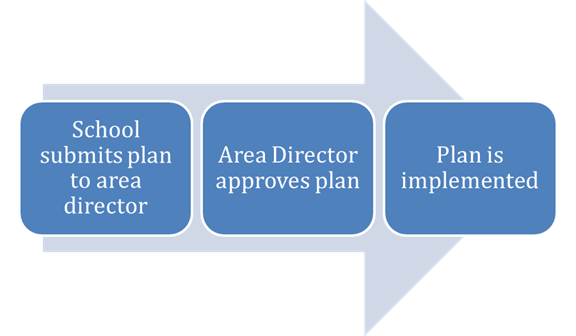
Pathway 1: Area Director Review & Approval
Eligibility: Schools that meet state threshold and meet the district threshold (e.g., 18/24) with no domain below a 3.
Area Director reviews the SIP and provides written feedback and approves plan.
Principals make any minor revisions requested.
Final approval is granted by the Area Director.
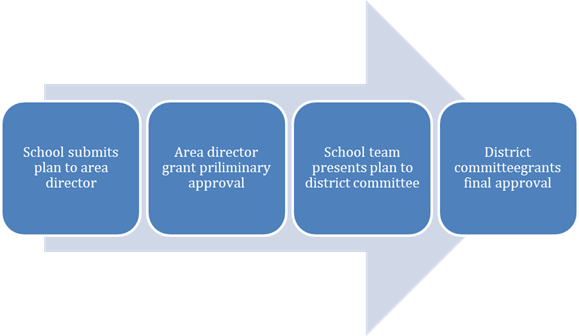
Pathway 2: District-Level Committee Review
Eligibility: SIP does not meet the state threshold.
Area Director reviews the SIP and provides written feedback and approves plan.
A district committee conducts a deeper review.
Principals and their leadership teams participate in a presentation to clarify processes, strategies, needs and expectations.
In necessary, specific revisions and timelines are provided, along with district supports.
After revisions, the revised SIP is approved.
Monitoring & Ongoing Support
All schools submit periodic progress updates aligned to SIP goals.
Area Directors monitor implementation and outcomes.
Schools receiving additional support may have scheduled check-ins and targeted coaching.
What Principals Should Expect
Clear expectations and consistent feedback.
Timely communication regarding review status.
Support aligned to identified needs.
A focus on continuous improvement rather than compliance.
SLCSD School Improvement Plan (SIP) Review Process
This process outlines the submission and approval process for the school improvement plans for schools in Salt Lake City School District.
For a plan to have been deemed successful, the school must meet the state established threshold of either an 1% growth as measured by the accountability metrics or the following points on the accountability metrics:
Elementary/Middle School – 43.5% or higher
High School –46% or higher
Flow Chart(s):
School Meets Threshold
School Does Not Meet Threshold
Salt Lake City School District School Improvement Plan (SIP) Rubric
This rubric is aligned to the SLCSD Strategic Plan for Student Achievement (2024–2029) and supports consistent, equity-centered review of School Improvement Plans.
Domain
Strategic Plan Alignment
1 – Needs Revision
2 – Developing
3 – Proficient
4 – Exemplary
Data Analysis & Root Cause
All Pillars; emphasis on Pillar 1 & 2
Goals & Outcomes
Aligned to Pillar Goals and Board Targets
Strategies & Action Steps
Pillars 1–4 as applicable
Equity & Student Support
Pillar 1: Equity, Access, Student Support
Implementation & Monitoring
All Pillars; Continuous Improvement
Overall Score: ______ / 20
Meets Area Director Approval Threshold? ☐ Yes ☐ No
Please review the guidelines below for dropping students due to consecutive unexcused absences. Requirements differ for General Education and Special Education students.
1. General Education Students
Drop Timeline: A general education student should be dropped on Day 11, after 10 consecutive unexcused absences.
Required Actions: Complete at least one documented intervention before dropping the student.
Acceptable interventions include:
· Phone calls
· Text messages
· Emails
· Home visits
Document all outreach in PowerSchool.
2. Special Education Students
Drop Timeline: A student with an IEP should be dropped on Day 31, after 30 consecutive unexcused absences.
Required Actions:
· Special education teachers must document all attempts to connect with the family.
Creating a Supportive Environment for Muslim Staff and Students During Ramadan."
Ramadan is a special time of spiritual reflection, fasting from dawn to sunset, and increased devotion for Muslims. As a school community, it’s important to foster a welcoming and inclusive atmosphere for Muslim staff and students during this period. Here are some helpful guidelines to ensure everyone feels supported:
Understand Ramadan and Its Practices
Fasting: Muslims refrain from eating, drinking (including water), and sometimes taking medications from dawn (Fajr) until sunset (Maghrib). The fast is typically broken with a meal called Iftar.
Prayer: In addition to the five daily prayers, many Muslims also participate in extra prayers called Taraweeh during the evening. This may lead to less sleep, so it’s important to be mindful of its potential impact on energy levels.
Eid al-Fitr: Ramadan concludes with the celebration of Eid al-Fitr, marked by prayers, family gatherings, and festivities. Muslim staff and students may request time off for this important holiday.
Foster a Flexible and Understanding Environment
Prayer Accommodations: Provide a quiet and private space for Muslim staff and students to pray during the day. Keep in mind that prayer times vary slightly based on the position of the sun.
Flexible Scheduling: Consider offering flexible schedules for fasting staff and students. Whenever possible, avoid scheduling exams, presentations, or physically demanding activities late in the day when energy levels may be lower.
Classroom Sensitivity: When planning classroom activities, such as parties or food-related events, be mindful of students who are fasting and create an environment where they feel comfortable.
Offer Alternatives for Physical Activities
PE Classes: For students who are fasting and may feel tired, allow them to opt-out of physically strenuous activities or participate in modified exercises.
Recess: Younger students who are fasting may prefer to engage in quieter activities during recess. Offer an indoor space where they can rest if needed.
Consider Lunch and Eating Spaces
Respectful Lunchtime Environment: For students who are fasting, offer a quiet space, such as a library or designated room, where they can spend lunchtime if they prefer to avoid the cafeteria.
Staff Breaks: For fasting staff members, ensure they have access to private spaces where they can rest or pray during lunch breaks.
Promote Inclusivity and Awareness
Community Education: Consider offering brief educational sessions or sharing resources about Ramadan to foster understanding and empathy within the school community.
Avoid Assumptions: Not all Muslims observe Ramadan in the same way. Some may not fast due to medical reasons or personal circumstances. Always respect individual choices and allow staff and students to participate as they see fit.
Accommodate for Eid al-Fitr
Time Off for Eid: Make sure Muslim staff and students can take time off to celebrate Eid al-Fitr. Encourage them to communicate their needs in advance to plan accordingly.
Schoolwide Acknowledgement: Consider recognizing Eid al-Fitr through announcements or newsletters, promoting inclusivity and respect for religious diversity within the school.
Communicate and Offer Support
Open Dialogue: Encourage Muslim staff and students to share any specific needs or accommodations they may require during Ramadan. Ensure that everyone feels comfortable discussing their needs with teachers and administrators.
Supportive Tone: Lead with a positive and welcoming tone, making it clear that the school is committed to fostering an inclusive and respectful environment for all religious observances.
By following these steps, the school can create a respectful, supportive, and inclusive atmosphere during Ramadan, showing genuine care for religious diversity and the well-being of all members of the school community.
Just a quick note to update you on what is new with RISE, though I did include the new parent resources for our other state required tests. Please share this information with your teachers.
USBE has added Parent Resources to all the USBE Assessment pages
New Cut scores for ELA have been released RISE-Score-Charts_2025_updated.pptx Please note, due to the significant changes in the ELA test, please do not compare last year’s results to this years at a scaled score level.
Please note; All RISE Individual Student reports for ELA, Writing, Math and Science are available to families in the PowerSchool parent portal.
The new writing reporting has 2 categories
Composition (argument/informative): Scale of 1-6
Conventions: Scale of 0.5-3
The two scores are not intended to be added together.
New Writing benchmark modules and ELA interim are available in RISE Test Administration
Most grades have multiple writing benchmarks available with fully automated scoring.
Grade 7 informative writing benchmarks still need more students to participate in the field test before automatic scoring is available. Field testing for 7th grade informative will open again in February.
NEW Feature Update on the RISE calculator in math and science. Students can now copy-paste their answers directly from the onscreen calculator into the response field. This feature is available:
On all Math and Science RISE assessments where calculators are provided onscreen
For all onscreen calculator types (basic, scientific, graphing)
Only for Equation Response items where a student must enter a numerical answer
New Utah Accessibility, Accommodations, and Participation Policy 2025–2026 Check out the Appendixes. There is an Appendix specific to each test which is divided into 2 sections. The first section are the tools and supports available for ALL students, the second section are the additional accommodations allowed for students if they are listed on their IEPs or 504s. Please note, some must be approved by either the state or district before they can be activated for students. RISE is Appendix J, pp 67-69
If you have questions, please don’t hesitate to contact me.
As winter approaches, this is our annual reminder to review and prepare Emergency Learning Plans in the event of a major snowstorm, windstorm, or other unexpected event that causes a sudden school closure.
While our goal is always to keep schools open—or, when possible, to delay the start of the school day rather than close entirely—being ready to pivot quickly ensures that student learning continues without interruption. Having these plans in place allows us to maintain quality at-home learning and avoid extending the school year, as required by state law when closures occur.
Overall Guidance
Each school’s plan will look a little different depending on student access to technology, home circumstances, and local procedures. The key is flexibility.
Use online or paper-based assignments as appropriate for your content area and grade level.
Provide clear directions and expectations for a day’s work:
Elementary: 3–4 hours total learning time
Secondary: 45–60 minutes per block class
Choose activities that focus on familiar content or independent learning tasks.
Include an exit ticket or assignment that can be submitted to validate student participation for attendance purposes.
Students with Disabilities
For students with IEPs or 504 Plans, please ensure that emergency lessons consider each student’s individual goals, accommodations, and accessibility needs so that all learners can participate meaningfully from home.
Elementary Schools
The district has prepared up to five (5) days of Emergency Learning Plans in ELA, Math, Science, Social Studies, Music/Fine Arts, and PE for grades K–6, available in the District Document Center.
You may:
Upload these lessons into your Canvas course if students have home computer access, or
Print and send home one or two days’ worth of lessons in advance, in case of an unexpected closure.
Please review all lessons before distributing to ensure alignment with your classroom instruction. If you have already developed your own emergency plans—wonderful! The district resources are simply available to support your preparation.
Secondary Schools
If your Canvas courses are current and students regularly access them, you are already in great shape. Having assignments and readings available online allows learning to continue seamlessly during closures.
For courses that don’t easily transition online, consider offline options, such as:
Logging personal activities related to your course
Reviewing safety procedures or study materials for certifications
Completing reflection or practice assignments
Thank you for taking the time to plan ahead on top of everything else you do every day. Your preparation ensures that learning continues smoothly, no matter what challenges the season brings.
We appreciate your flexibility, creativity, and commitment to our students.
Rationale:
Having emergency lessons prepared in advance allows schools to continue instruction on days when weather or other emergencies require building closures. Providing structured at-home learning ensures that students remain engaged in meaningful educational activities, even when they cannot attend in person.
By implementing these emergency learning days, the district can count the day toward the state-required minimum number of instructional days, which prevents the need to extend the school year to make up for lost time. This approach maintains instructional continuity and compliance with state law while offering flexibility to families and staff during unexpected events.
Expectations for Implementation:
Communication
Principals are responsible to communicate this information to their teachers and ensure that classrooms are prepared for an emergency closure.