
Summary:
The School Improvement Plan (SIP) Review Process is designed to support high-quality planning across all schools while promoting clarity, consistency, and continuous improvement. This process reflects our shared commitment to data-informed decision-making, equitable student outcomes, and alignment with district priorities. By establishing clear expectations and a common rubric, the SIP review process ensures that every school receives meaningful feedback and differentiated support based on plan readiness. Most importantly, the process emphasizes partnership and growth, providing principals and leadership teams with guidance, transparency, and targeted assistance to strengthen implementation and improve outcomes for students.
Purpose
- Ensure every School Improvement Plan is clear, data-driven, and aligned to district priorities.
- Provide transparent expectations for SIP quality.
- Differentiate review and support based on plan readiness.
Annual SIP Timeline
- Spring–Early Fall: Schools analyze data and develop SIPs using the district template.
- Submission Deadline: Principals submit SIPs to the district.
- Rubric Review: All SIPs are reviewed using the District SIP Rubric.
- Approval & Feedback: Schools receive approval or revision guidance.
SIP Review Rubric Overview
All SIPs are reviewed using a common rubric to ensure consistency across schools. Each domain is scored on a 1–4 scale.
Rubric Domains
- Needs Assessment & Data Analysis
- Goals & Measurable Outcomes
- Strategies & Action Steps
- Equity & Student Support
- Implementation Capacity
- Monitoring & Continuous Improvement
Scoring Scale
- 4 – Exemplary: Clear, aligned, and ready for implementation.
- 3 – Meets Expectations: Solid plan with minor refinements needed.
- 2 – Approaching Expectations: Key components present but require revision.
- 1 – Does Not Meet Expectations: Significant gaps requiring support.
Review Pathways
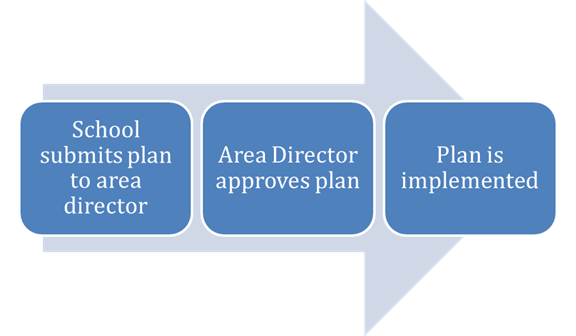
Pathway 1: Area Director Review & Approval
- Eligibility: Schools that meet state threshold and meet the district threshold (e.g., 18/24) with no domain below a 3.
- Area Director reviews the SIP and provides written feedback and approves plan.
- Principals make any minor revisions requested.
- Final approval is granted by the Area Director.
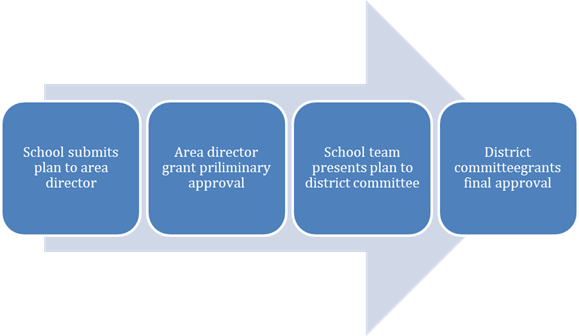
Pathway 2: District-Level Committee Review
- Eligibility: SIP does not meet the state threshold.
- Area Director reviews the SIP and provides written feedback and approves plan.
- A district committee conducts a deeper review.
- Principals and their leadership teams participate in a presentation to clarify processes, strategies, needs and expectations.
- In necessary, specific revisions and timelines are provided, along with district supports.
- After revisions, the revised SIP is approved.
Monitoring & Ongoing Support
- All schools submit periodic progress updates aligned to SIP goals.
- Area Directors monitor implementation and outcomes.
- Schools receiving additional support may have scheduled check-ins and targeted coaching.
What Principals Should Expect
- Clear expectations and consistent feedback.
- Timely communication regarding review status.
- Support aligned to identified needs.
- A focus on continuous improvement rather than compliance.
SLCSD School Improvement Plan (SIP) Review Process
This process outlines the submission and approval process for the school improvement plans for schools in Salt Lake City School District.
For a plan to have been deemed successful, the school must meet the state established threshold of either an 1% growth as measured by the accountability metrics or the following points on the accountability metrics:
- Elementary/Middle School – 43.5% or higher
- High School –46% or higher
Flow Chart(s):
School Meets Threshold
School Does Not Meet Threshold
Salt Lake City School District
School Improvement Plan (SIP) Rubric
This rubric is aligned to the SLCSD Strategic Plan for Student Achievement (2024–2029) and supports consistent, equity-centered review of School Improvement Plans.
| Domain | Strategic Plan Alignment | 1 – Needs Revision | 2 – Developing | 3 – Proficient | 4 – Exemplary |
| Data Analysis & Root Cause | All Pillars; emphasis on Pillar 1 & 2 | ||||
| Goals & Outcomes | Aligned to Pillar Goals and Board Targets | ||||
| Strategies & Action Steps | Pillars 1–4 as applicable | ||||
| Equity & Student Support | Pillar 1: Equity, Access, Student Support | ||||
| Implementation & Monitoring | All Pillars; Continuous Improvement |
Overall Score: ______ / 20
Meets Area Director Approval Threshold? ☐ Yes ☐ No
Reviewer Comments:
