Skip to content

Subject: Utah Jazz + Utah Mammoth Launch New “Assist for Good” Student Grant Opportunity – Applications Due March 20

We are excited to share a new opportunity for your students through the SEG Foundation. We hope that you pass this along to the principals at your middle, junior and high schools. Today we launched the “Assist for Good” Grant Program, which empowers junior high and high school students across Utah to create meaningful, student-led change within their school communities.

Through this program, students are invited to submit an application outlining an action plan to address a specific need at their school. Selected schools may receive up to $2,000 in grant funding to bring their student-driven project to life during the remainder of the 2025–26 school year. 

Projects may focus on areas such as:

  • Student wellness
  • Inclusion initiatives
  • Campus improvements
  • Service projects
  • Other programs that create lasting, positive impact

Applications are due March 20, 2026. Interested students can apply here.

Students from each winning school will also be invited to attend either the March 23, Utah Mammoth game or the March 30, Utah Jazz game, where they will be recognized for their commitment to uplifting their school community.

We would love your help in sharing this opportunity with school leaders, student leaders, clubs, councils, and other groups who may be interested in proposing a project. This is a wonderful chance for students to practice leadership, collaboration, and service while making a real difference in their schools.

Thank you for all you do to support and inspire your students. Please feel free to reach out to me or segfoundation@teamseg.com with any questions.

Kaitlyn Jones
Director, Community Relations & Foundation Efforts 801-325-2733  |  kaitlyn.jones@teamseg.com 1420 S 500 W, Salt Lake City, UT 84115 App Banner Image
 

Summary:

SLCSD must have parents on the Human Sexuality Committee. This committee reviews all materials used to teach health topics related to maturation, sexuality, relationships, etc. We would like to have 10 parents from throughout the district agree to be on the committee. We need to have names by May 1 so we can have them approved by the Board. A flier is available to share with parents (click here to download).

Rationale: 

State administrative code and district AP I-12: Human Sexuality Education indicate that we must have “at least as many parents as school employees” on the committee. We would like to have wide parent representation to review materials that will be used in Health classes.

Expectations for Implementation: 

  1. Communication
  2. Ask parent groups for volunteers to participate for the 2026-27 school year.
    1. There are up to  5 meetings a year, scheduled from 4:00 – 5:00PM (If there is not a program to review, the meeting is canceled.)
    1. Meetings are held in person, but parents can participate online.
  3. Collaboration: 
  4. Katie Lowery is available to help answer questions and talk with parents, 801-578-8208.

  5. Evaluation
  6. Please send names to katie.lowery@slcschools.org by May 1, 2026

Keywords: Human Sexuality, committee, health, state requirements

The Policy Project is pleased to announce the launch of the Focused Classroom Implementation Grants, a new funding opportunity supporting Utah schools implementing student device policies aligned with Utah Code 53G-7-227.

These implementation grants are designed to help schools move from policy adoption to effective practice by supporting tools, communication strategies, and student engagement efforts that strengthen focused learning environments.

Schools may request up to $5,000 per site, and LEAs may submit applications for multiple schools.

A central priority of this program is meaningful student engagement. We encourage applications that involve students as partners in implementation, feedback, and culture-building efforts.

Key Details

  • Up to $5,000 per school site
  • Flexible implementation timeline options
  • Funding distributed upfront
  • Applications due April 1, 2026
  • Awards announced by May 1, 2026

Apply Here:

👉GRANT ANNOUNCEMENT

👉 APPLICATION LINK

Focused Classrooms Toolkit 

In cooperation with the Utah State Board of Education, The Policy Project developed the Focused Classrooms Toolkit, which includes model policies, communication resources, and implementation guidance to support local decision-making.

👉 TOOLKIT LINK

Please share this opportunity with school leaders who may benefit from implementation support.

We look forward to partnering with schools across Utah to support focused, engaging learning environments.

Lindsay Butrum, MPH

Policy Implementation Manager

thepolicyproject.org

773.865.5453

Greetings,

We’d like to make you aware of our latest free virtual online offerings that Ballet West is presenting for Students and Teachers.

We would be very grateful if you were to make the requests for your entire school and share the information and passwords with all your teachers. Or you could pass this message along to your teachers and they could fill out the requests individually. Your school is welcome to request access to all three offerings and keep them in your pocket for use throughout the remainder of the year.

To make this process as easy as possible, and to expedite your ability to gain the passwords you will need, please access the google form at this link to request access to the programs you’d like.

Click here to request passwords:

Virtual Offerings 2025-2026 – Google Request form

These programs provide resources and inspiration applicable for all art forms, Dance, Music, Drama and Visual Art! We would love to have these offered to your students throughout all grades. The links will be available through the end of this academic school year (2025-2026).

A person and person dancing on stage

AI-generated content may be incorrect.Through our Ballet West Student In-Theater Presentations, we bring some of the most beloved fairy tales to life. These lively and entertaining performances will provide proof that there’s more than one way to help our children understand how and why a classic fairy tale becomes a “classic.” These are narrated productions, and we have offerings in both English and Spanish versions with closed captioning. The offerings we have available include our In-theatre presentations of Beauty and the Beast, as well as Snow White. We are also pleased to offer an expanded version of our Ballet West for Children Lecture Demonstration, Ballet and The Sleeping Beauty. This virtual resource offers an exceptional opportunity for teachers to explore engaging material and easily incorporate it into classroom instruction.

 These offerings are offered free of charge and are reserved for teachers and their students exclusively and not the general public.

We will provide study guides, which include follow-up projects and activities which assist teachers in their efforts to incorporate the Utah State Core Curriculum, Life Skills, and Career and College readiness concepts, into their classrooms. These are available for all offerings, and we recommend these for all grades. Additionally, you may have received this email more than once, our intention is simply to ensure you have access to this important information.

Please let me know if you have any questions.

Thank you for your assistance.

 Best wishes,

Peter

A black and white logo

AI-generated content may be incorrect. Peter Christie
Ballet West Director of Education and Outreach Office: 801-869-6911 | Cell: 801-898-5506 | Fax 801-359-3504 PChristie@BalletWest.org |balletwest.org  52 West 200 South, SLC, UT 84101

 ​​

Title: AAMP Scheduling and Budgets

Date:              03/2/2026

To:                   Elementary Principals

From: Garret Rose, PhD
                        Teaching & Learning

Subject:         Setting Schedules and Budgets for SY 26-27

Summary:

As you begin your master scheduling for SY 26-27, please regard the following while building the schedule:

ALL elementary schools (with the exception of the Open Classroom) have AAMP services. 

  1. AAMP serves students in a pull-out program in grades 4-6 in a student’s neighborhood elementary school for up to 3 hours per week.

DISCOVERY GROUPS

  1. Discovery Groups offer part-time enrichment for skill development in grades K-3.

Please work with your AAMP teacher at the earliest possible time to build into your complex schedule of times that work for all parties involved. 

Funding:

Some schools provided additional funding to the legislative funds that AAMP teachers received. Continuing this would be helpful as the AAMP pull-out program is serving more students each year as we are now identifying and serving more students in verbal, quantitative, and non-verbal groups.  Understandably, budgets are shrinking, but please be considerate of this program when making decisions.

Rationale: 

This is a district-sponsored program; your support helps us to provide specific services to enrich students’ learning.

Expectations for Implementation: 

  1. Communication
  2. Principals are responsible to work with AAMP teachers for grade 4-6 pullout times (discovery can be more fluid)
  3. Collaboration: 
  4. Teachers, administration, AAMP Supervisor
  5. Evaluation
  6. A working schedule with times incorporated

*Should you have questions and/or concerns, I am available for in-person and/or a Teams meeting at your convenience. 

February for Christians, particularly in Roman Catholic and liturgical traditions, is dedicated to the Holy Family and marks the transition from Ordinary Time to the penitential season of Lent. Key observances include Candlemas (Feb 2), the beginning of Lent with Ash Wednesday (Feb 18, 2026), and numerous feast days for saints. 

Key February Christian Observances & Feast Days (2026)

Month of the Holy Family: February is traditionally dedicated to Jesus, Mary, and Joseph, emphasizing family virtues.

  • February 2: Presentation of the Lord / Candlemas / World Day for Consecrated Life: Celebrates the presentation of Jesus in the Temple and Mary's purification. Candles are blessed, symbolizing Christ as the "Light of Revelation".
  • February 3: St. Blaise Day (Blessing of the Throats): Commemoration of St. Blaise of Sebaste, often marked by the blessing of throats.
  • February 11: Our Lady of Lourdes / World Day of the Sick: Feast Day celebrating the apparition of Mary in Lourdes, France.
  • February 17: Seven Founders of the Servite Order: Feast Day.
  • February 18: Ash Wednesday (2026): Marks the start of Lent, a 40-day period (excluding Sundays) of fasting, prayer, and penance leading to Easter.
    • On Ash Wednesday – The day encourages a "turn away from sin and be faithful to the gospel".
      • Catholics attend Mass to receive ashes, which symbolize mortality, repentance, and a commitment to follow the Gospel. It serves as a public sign of humility and repentance.
      • Catholics aged 18-59 are required to fast (one full meal and two smaller meals that do not equal a full meal).
      • Catholics aged 14 and older are required to abstain from eating meat on Ash Wednesday and all Fridays during Lent.
    • All Fridays during Lent – Catholics are to abstain from eating meat.
  • February 22: Chair of St. Peter: A feast day celebrating the authority of the Pope.
  • February 23: St. Polycarp: Feast Day of the bishop and martyr. 

Title: FOCUS Data training

Date:              2/5/26

To:                  Assistant Principals

From:             Erin Anderson, Director of Special Education

Subject:        Additional training times for FOCUS Data training

Summary:

This short session provides Assistant Principals with a clear overview of the Focus Committee’s role in supporting schools as they prepare for IEP meetings that may involve a change of placement.

We will review the types of data required to inform placement discussions, including academic, behavioral, and progress-monitoring information, and will learn how to prepare school teams for effective, compliant, and student-centered IEP meetings. The session emphasizes thoughtful preparation and shared understanding to ensure placement decisions are supported by data and aligned with student needs.

Please find a day and time that works for you to attend the FOCUS data training. The last session will be offered online.

  • 2/11/26 from 3 pm to 4 pm (P211)
  • 2/18/26 from 8:30 am to 9:30 am (P211)
  • 2/24/26 from 8:30 am to 9:30 am (P211)
  • 3/3/26 from 10 am to 11 am on Zoom

Sign-up using Kick-up (Browse events > Seach “Focus”)

Rationale: 

At the March DLC meeting, Special Education will continue on with the FOCUS presentations. This training is necessary background knowledge to have prior to the next topic.

Expectations for Implementation: 

  1. Sign up in Kick-up for a time that works for you

Summary:

The School Improvement Plan (SIP) Review Process is designed to support high-quality planning across all schools while promoting clarity, consistency, and continuous improvement. This process reflects our shared commitment to data-informed decision-making, equitable student outcomes, and alignment with district priorities. By establishing clear expectations and a common rubric, the SIP review process ensures that every school receives meaningful feedback and differentiated support based on plan readiness. Most importantly, the process emphasizes partnership and growth, providing principals and leadership teams with guidance, transparency, and targeted assistance to strengthen implementation and improve outcomes for students.

Purpose

  • Ensure every School Improvement Plan is clear, data-driven, and aligned to district priorities.
  • Provide transparent expectations for SIP quality.
  • Differentiate review and support based on plan readiness.

Annual SIP Timeline

  • Spring–Early Fall: Schools analyze data and develop SIPs using the district template.
  • Submission Deadline: Principals submit SIPs to the district.
  • Rubric Review: All SIPs are reviewed using the District SIP Rubric.
  • Approval & Feedback: Schools receive approval or revision guidance.

SIP Review Rubric Overview

All SIPs are reviewed using a common rubric to ensure consistency across schools. Each domain is scored on a 1–4 scale.

Rubric Domains

  • Needs Assessment & Data Analysis
  • Goals & Measurable Outcomes
  • Strategies & Action Steps
  • Equity & Student Support
  • Implementation Capacity
  • Monitoring & Continuous Improvement

Scoring Scale

  • 4 – Exemplary: Clear, aligned, and ready for implementation.
  • 3 – Meets Expectations: Solid plan with minor refinements needed.
  • 2 – Approaching Expectations: Key components present but require revision.
  • 1 – Does Not Meet Expectations: Significant gaps requiring support.

Review Pathways

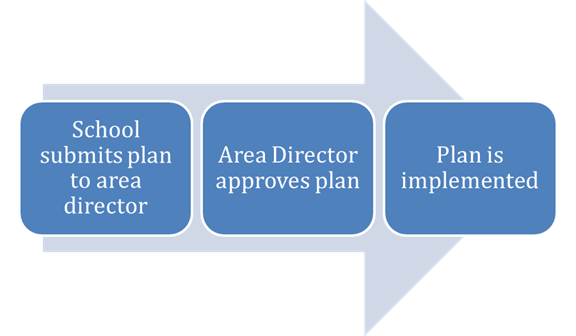
Pathway 1: Area Director Review & Approval

  • Eligibility: Schools that meet state threshold and meet the district threshold (e.g., 18/24) with no domain below a 3.
  • Area Director reviews the SIP and provides written feedback and approves plan.
  • Principals make any minor revisions requested.
  • Final approval is granted by the Area Director.

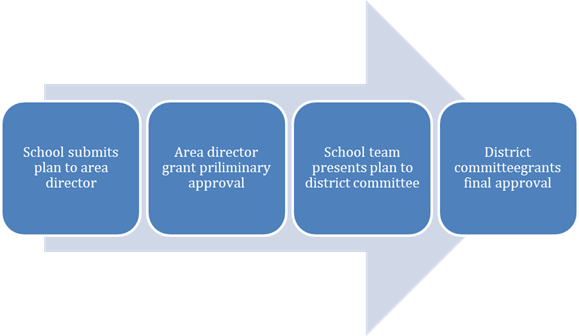
Pathway 2: District-Level Committee Review

  • Eligibility: SIP does not meet the state threshold.
  • Area Director reviews the SIP and provides written feedback and approves plan.
  • A district committee conducts a deeper review.
  • Principals and their leadership teams participate in a presentation to clarify processes, strategies, needs and expectations.
  • In necessary, specific revisions and timelines are provided, along with district supports.
  • After revisions, the revised SIP is approved.

Monitoring & Ongoing Support

  • All schools submit periodic progress updates aligned to SIP goals.
  • Area Directors monitor implementation and outcomes.
  • Schools receiving additional support may have scheduled check-ins and targeted coaching.

What Principals Should Expect

  • Clear expectations and consistent feedback.
  • Timely communication regarding review status.
  • Support aligned to identified needs.
  • A focus on continuous improvement rather than compliance.


SLCSD School Improvement Plan (SIP) Review Process

This process outlines the submission and approval process for the school improvement plans for schools in Salt Lake City School District.

For a plan to have been deemed successful, the school must meet the state established threshold of either an 1% growth as measured by the accountability metrics or the following points on the accountability metrics:

  • Elementary/Middle School – 43.5% or higher
  • High School –46% or higher

Flow Chart(s):

School Meets Threshold


School Does Not Meet Threshold


Salt Lake City School District
School Improvement Plan (SIP) Rubric

This rubric is aligned to the SLCSD Strategic Plan for Student Achievement (2024–2029) and supports consistent, equity-centered review of School Improvement Plans.

DomainStrategic Plan Alignment1 – Needs Revision2 – Developing3 – Proficient4 – Exemplary
Data Analysis & Root CauseAll Pillars; emphasis on Pillar 1 & 2    
Goals & OutcomesAligned to Pillar Goals and Board Targets    
Strategies & Action StepsPillars 1–4 as applicable    
Equity & Student SupportPillar 1: Equity, Access, Student Support    
Implementation & MonitoringAll Pillars; Continuous Improvement    


Overall Score: ______ / 20

Meets Area Director Approval Threshold?  ☐ Yes   ☐ No

Reviewer Comments:

Please review the guidelines below for dropping students due to consecutive unexcused absences. Requirements differ for General Education and Special Education students. 

1. General Education Students 

Drop Timeline: A general education student should be dropped on Day 11, after 10 consecutive unexcused absences. 

Required Actions: Complete at least one documented intervention before dropping the student. 

Acceptable interventions include: 

·  Phone calls 

·  Text messages 

·  Emails 

·  Home visits 

Document all outreach in PowerSchool. 

2. Special Education Students 

Drop Timeline: A student with an IEP should be dropped on Day 31, after 30 consecutive unexcused absences. 

Required Actions: 

· Special education teachers must document all attempts to connect with the family. 

· Email all documentation to Erin Anderson. 

· Fill out the 10-day Ready and Willing Letter FORM document at 10 days of consecutive, unexcused absences. 

· Complete the SCRAM link on the DDC. 

· Exit the student using code M. 

If you have any questions or need further assistance, please reach out to Dr. Bri Conley (Bri.Conley@slcschools-org )

Creating a Supportive Environment for Muslim Staff and Students During Ramadan."

Ramadan is a special time of spiritual reflection, fasting from dawn to sunset, and increased devotion for Muslims. As a school community, it’s important to foster a welcoming and inclusive atmosphere for Muslim staff and students during this period. Here are some helpful guidelines to ensure everyone feels supported:

  1. Understand Ramadan and Its Practices
    • Fasting: Muslims refrain from eating, drinking (including water), and sometimes taking medications from dawn (Fajr) until sunset (Maghrib). The fast is typically broken with a meal called Iftar.
    • Prayer: In addition to the five daily prayers, many Muslims also participate in extra prayers called Taraweeh during the evening. This may lead to less sleep, so it’s important to be mindful of its potential impact on energy levels.
    • Eid al-Fitr: Ramadan concludes with the celebration of Eid al-Fitr, marked by prayers, family gatherings, and festivities. Muslim staff and students may request time off for this important holiday.
  2. Foster a Flexible and Understanding Environment
    • Prayer Accommodations: Provide a quiet and private space for Muslim staff and students to pray during the day. Keep in mind that prayer times vary slightly based on the position of the sun.
    • Flexible Scheduling: Consider offering flexible schedules for fasting staff and students. Whenever possible, avoid scheduling exams, presentations, or physically demanding activities late in the day when energy levels may be lower.
    • Classroom Sensitivity: When planning classroom activities, such as parties or food-related events, be mindful of students who are fasting and create an environment where they feel comfortable.
  3. Offer Alternatives for Physical Activities
    • PE Classes: For students who are fasting and may feel tired, allow them to opt-out of physically strenuous activities or participate in modified exercises.
    • Recess: Younger students who are fasting may prefer to engage in quieter activities during recess. Offer an indoor space where they can rest if needed.
  4. Consider Lunch and Eating Spaces
    • Respectful Lunchtime Environment: For students who are fasting, offer a quiet space, such as a library or designated room, where they can spend lunchtime if they prefer to avoid the cafeteria.
    • Staff Breaks: For fasting staff members, ensure they have access to private spaces where they can rest or pray during lunch breaks.
  5. Promote Inclusivity and Awareness
    • Community Education: Consider offering brief educational sessions or sharing resources about Ramadan to foster understanding and empathy within the school community.
    • Avoid Assumptions: Not all Muslims observe Ramadan in the same way. Some may not fast due to medical reasons or personal circumstances. Always respect individual choices and allow staff and students to participate as they see fit.
  6. Accommodate for Eid al-Fitr
    • Time Off for Eid: Make sure Muslim staff and students can take time off to celebrate Eid al-Fitr. Encourage them to communicate their needs in advance to plan accordingly.
    • Schoolwide Acknowledgement: Consider recognizing Eid al-Fitr through announcements or newsletters, promoting inclusivity and respect for religious diversity within the school.
  7. Communicate and Offer Support
    • Open Dialogue: Encourage Muslim staff and students to share any specific needs or accommodations they may require during Ramadan. Ensure that everyone feels comfortable discussing their needs with teachers and administrators.
    • Supportive Tone: Lead with a positive and welcoming tone, making it clear that the school is committed to fostering an inclusive and respectful environment for all religious observances.

By following these steps, the school can create a respectful, supportive, and inclusive atmosphere during Ramadan, showing genuine care for religious diversity and the well-being of all members of the school community.

x  Powerful Protection for WordPress, from Shield Security
This Site Is Protected By
Shield Security